Building a remote team is one challenge. Managing it well is an entirely different one. The right remote team management strategies are what separate distributed teams that thrive from ones that quietly fall apart, and in 2026, the data on what actually works is clearer than ever.
If you already have a remote team in place, this guide picks up where our previous post, How to Build a High-Performing Remote Team leaves off. Below are seven remote team management strategies that are working right now, backed by current research, not outdated assumptions.
1. Manage Outcomes, Not Hours
The single biggest shift among effective remote team management strategies in 2026 is the move away from tracking hours and toward tracking results. Research from the Bureau of Labor Statistics, analysing 61 industries, found that a 1 percentage-point increase in remote work participation correlates with a measurable rise in total factor productivity, even after controlling for pre-pandemic trends.
Yet a persistent perception gap remains. While 69% of managers say hybrid and remote work has positively influenced their teams' productivity, according to Owl Labs' State of Hybrid Work 2025 report, many leadership teams still default to presence-based management out of habit rather than evidence. The most effective remote team management strategies replace this instinct with clear, output-based metrics agreed upon at the start of every project or sprint.
2. Build Structured, Not Constant, Communication
Why Communication Structure Matters More Than Communication Volume
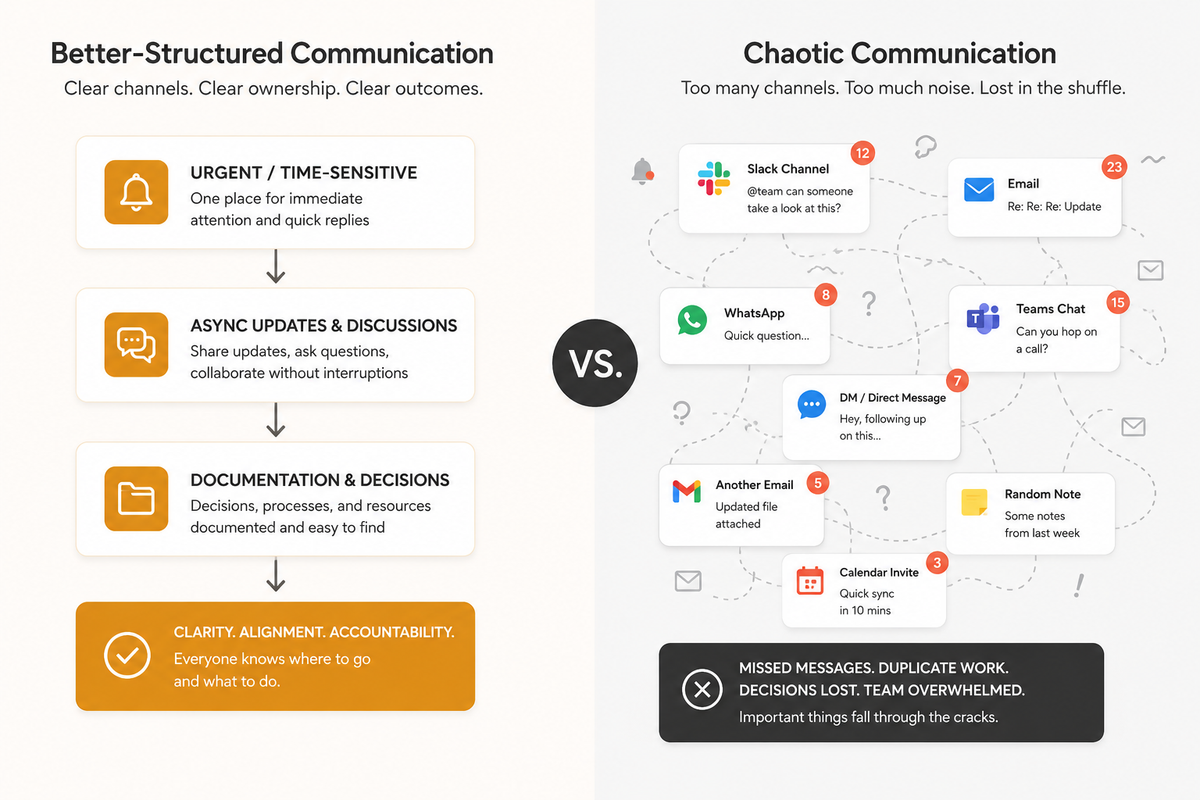
Nearly 29% of remote employees report struggling with gaps in team communication, while a separate share of the workforce feels overwhelmed by the sheer volume of messages, emails, and notifications competing for attention throughout the day. The fix is not more communication. It is better-structured communication.
Among the remote team management strategies proving most effective right now: scheduled daily or weekly check-ins, clear channel ownership, one place for urgent items, another for async updates, and documented decisions that do not rely on someone remembering a Slack thread from three weeks ago.
3. Take Burnout Seriously Before It Shows Up in Output

This is the statistic that should change how every distributed team is managed: 86% of fully remote workers report experiencing burnout. Remote work removes the natural cues, like a colleague noticing someone is overwhelmed, that often catch burnout early in a physical office.
Effective remote team management strategies build in deliberate checks for this. Regular one-on-ones that ask about workload, not just deliverables. Encouraged time off that is genuinely taken, not just offered on paper. And managers trained to notice early warning signs, like a usually responsive team member going quiet, rather than waiting for performance to visibly slip.
4. Use Anchor Days Instead of Random Hybrid Schedules
For teams operating on a hybrid model, one of the more counterintuitive remote team management strategies gaining traction is the use of anchor days, fixed days when the whole team is expected to be present, whether in person or fully online and available, rather than leaving attendance entirely random.
Studies on hybrid scheduling consistently show that coordinated in-person or high-availability days produce stronger collaboration outcomes than schedules where team members choose their days independently. The goal is not rigid control. It is making sure the moments that matter for collaboration are not left to chance.
5. Address the Trust Gap Directly
Closing the Gap Between What Managers Believe and What the Data Shows
One of the more uncomfortable findings in recent workforce research is this: a significant share of leaders privately doubt that their distributed teams are performing well, even when the data says otherwise. This gap between perception and reality leads directly to two damaging outcomes, unnecessary return-to-office mandates and invasive monitoring software, both of which research has linked to lower morale without any corresponding gain in output.
The remote team management strategies that work best here are not about more oversight. They are about replacing assumption with visibility, shared dashboards, transparent goal tracking, and regular outcome reviews that give managers the confidence that comes from data, not guesswork.
6. Strengthen Culture Through Design, Not Default
Roughly two-thirds of companies report struggling to maintain morale and culture in distributed settings. Culture in a remote environment does not happen by accident the way it might in a shared office. It has to be built deliberately.
Practical remote team management strategies here include recurring non-work touchpoints, such as a regular informal call or a shared interest channel, visible recognition of good work in front of the wider team, and onboarding processes that introduce new hires to the human side of the company, not just the tools and the org chart.
7. Get the Vetting and Onboarding Right From the Start
No management strategy compensates for a poor initial hire. The most sustainable remote team management strategies start before day one, with rigorous vetting, clear role definitions, and a structured onboarding process that sets expectations early.
This is precisely the gap All Talentz was built to close. Every professional we place is trained, vetted, and supported with ongoing performance management, which means the strategies above have a much stronger foundation to work from. If you are looking for the practical tools to put these strategies into action, our guide on Top Tools For Managing Remote Employees is the right place to start.
Ready to Strengthen Your Remote Team?
All Talentz provides trained, vetted remote professionals with ongoing performance management built in.
Conclusion
The businesses winning with distributed teams in 2026 are not the ones working harder to monitor their people. They are the ones applying the right remote team management strategies consistently: managing by outcomes, structuring communication, protecting against burnout, designing intentional touchpoints for culture, and closing the trust gap with real data instead of assumption.
None of these strategies work in isolation, and none of them work well on top of a poorly built team. If your remote team management strategies are solid but your hiring process is not, the cracks will show eventually. And if your hiring process is strong but your management approach is outdated, you will struggle to retain the very talent you worked hard to find.
All Talentz exists to strengthen both sides of that equation, providing trained, vetted talent and the ongoing support that makes the remote team management strategies above genuinely sustainable. Visit alltalentz.com/request-talent to request talent and start building a remote team that is built to last.
Your Next Great Hire Is One Step Away
Trained. Vetted. Managed. All Talentz makes remote team management easier from day one.
Frequently Asked Questions
What are the most important remote team management strategies for 2026?
The most important remote team management strategies for 2026 include managing by outcomes rather than hours, structuring communication intentionally, proactively addressing burnout, using anchor days for hybrid teams, closing the trust gap with data-driven visibility, deliberately building culture, and getting vetting and onboarding right from the start.
How do you measure remote team performance without micromanaging?
Effective remote team management strategies favour output-based metrics, clearly defined deliverables, and shared dashboards over time-tracking or invasive monitoring software, which research links to lower morale without improving actual output.
Why do remote teams struggle with burnout?
Remote work removes the in-person cues that typically help colleagues and managers notice burnout early. Without deliberate check-ins focused on workload, not just output, burnout can build unnoticed until it affects performance.
Are anchor days better than fully flexible hybrid schedules?
For most hybrid teams, yes. Anchor days ensure that collaborative moments are not left to chance, while still preserving the flexibility that makes hybrid and remote work appealing to employees.
How can a company close the trust gap with its remote team?
Closing the trust gap requires replacing assumption-based management with visibility tools such as shared goal tracking, transparent dashboards, and regular outcome reviews, allowing managers to assess performance with data instead of guesswork.
Can a structured outsourcing partner improve remote team management outcomes?
Yes. Working with a partner like All Talentz that handles vetting, training, and ongoing performance management gives internal teams a stronger foundation, making day-to-day remote team management strategies significantly easier to execute well.
Build a Team That Performs From Day One
All Talentz handles vetting, training, and performance management so your remote team management strategies have the right foundation.