
Excerpt About Managing Remote Employees: This Wasn’t in the Playbook.
In early 2020, a digital marketing agency in Austin, Texas sent their entire 35-person team home with laptops and a prayer. Within six months, their productivity had increased by 22%. Their best employee, a strategist based in Edinburgh, Scotland, was now accessible full-time. Their overhead costs had dropped by nearly $200,000 annually.
They didn't plan to become a remote-first company. But once they did, they never looked back.
A public relations firm in London, England tells a similar story. So does a SaaS startup in Calgary, Alberta. And a consulting firm in Miami, Florida.
The remote work revolution is not coming. It's here. And businesses that learn to build genuinely high-performing remote teams are outcompeting those that cling to the old ways, not just on cost, but on talent, innovation, and speed.
This guide is your playbook.
Building a High-Performing Remote Team in 2026
Building a remote team that delivers is not simply about handing people laptops and setting up a Slack channel. It requires deliberate design, across three critical pillars that every successful distributed team is built on: Culture, Communication, and Engagement.
Master these three, and distance becomes irrelevant. Neglect them, and even the most talented individuals will underperform.
Culture: The Invisible Architecture of Your Remote Team
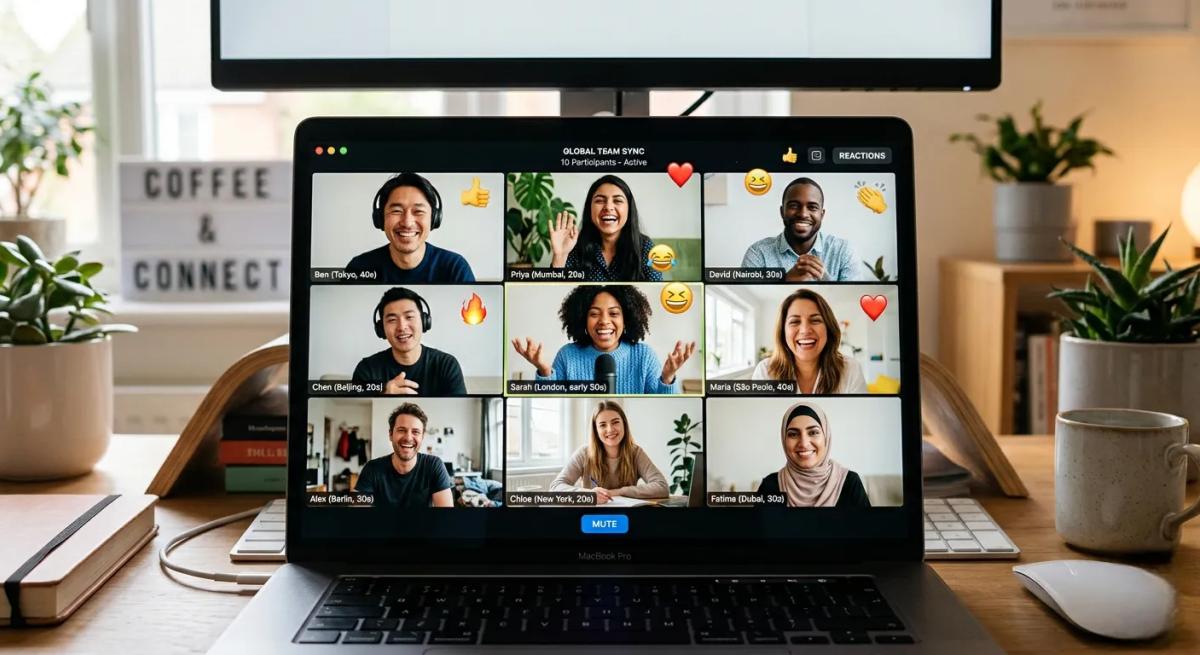
Here's an uncomfortable truth: most companies talk about culture in the office where it often forms naturally through proximity. In a remote environment, culture doesn't just happen. You have to build it, brick by brick, with intention.
Culture is the shared set of values, behaviors, and beliefs that determine how your team shows up every day, especially when no one is watching. It's what keeps a developer in Birmingham, UK aligned with a designer in Vancouver, Canada even though they've never met in person.
Define and Communicate Your Core Values
What does your organization actually stand for? Not the generic "integrity, innovation, excellence" boilerplate but the real values that drive decisions, resolve conflicts, and attract the right talent.
Write them down. Make them specific. And then critically demonstrate them through action. Remote teams can tell the difference between values that are framed on walls (virtually or otherwise) and values that actually guide leadership behavior.
Build Radical Transparency Into Your Culture
Remote teams that thrive operate on a foundation of transparency. Share company goals, quarterly results, challenges, and strategic decisions openly. When people in Toronto, Dallas, and Bristol all have the same information, trust grows and politics shrink.
Tools like Notion, Confluence, or even a well-organized Google Drive can serve as your company's "knowledge culture" a living documentation of who you are and how you work.
Design Virtual Team-Building That Actually Works
The virtual happy hour via Zoom got tired fast. In 2025, leading remote teams invest in creative team-building:
- Online trivia competitions with prizes
- Virtual cooking or mixology classes with ingredient delivery boxes
- Digital escape rooms designed for global teams across time zones
- Quarterly "culture challenges" where teams compete on creative projects
- Annual offsites where the remote team meets in person once a year in a destination city like New York, London, or Toronto
Celebrate Relentlessly
Recognition matters more in remote environments because the organic "great job" in the hallway doesn't exist. Create structured rituals for celebrating wins weekly shoutouts in team channels, monthly performance highlights, anniversary recognitions, and peer-to-peer awards.
A team member in Glasgow, Scotland working with a team in Atlanta, Georgia needs to feel seen not just as a resource, but as a person contributing to something meaningful.
Encourage Informal Connection
High-performing remote teams aren't all business, all the time. Create virtual spaces for informal interaction dedicated "water cooler" Slack channels, optional Friday afternoon hangouts, "Show Us Your Desk" photo challenges. These small moments build the human bonds that sustain team performance during challenging periods.
Communication: The Lifeblood of Your Distributed Team
In a co-located office, communication happens automatically through overhearing conversations, body language, impromptu meetings, and the ambient awareness of knowing who's doing what. Strip that away, and you're left with a communication vacuum that, if unfilled, will sabotage even the most talented remote team.
The solution is not to over-communicate chaotically it's to communicate strategically.
1. Establish a Communication Architecture
Not all communication is equal. Define your communication layers:
- Synchronous communication (real-time): Video calls (Zoom, Google Meet), live Slack messages for urgent matters, relationship-building, and complex collaborative work
- Asynchronous communication (non-real-time): Email, recorded Loom videos, Slack threads, project management comments for updates, feedback, and information that doesn't require an immediate response
- Documentation-first culture: Critical decisions, project briefs, and processes should always be written down not just discussed verbally
A marketing agency in Chicago, Illinois managing a team across the UK, US, and Canada might designate Slack for real-time team chat, Asana for project management, Loom for non-urgent explanations, and weekly Zoom stand-ups for team alignment.
2. Invest in the Right Technology Stack
Your tools are your office. Invest wisely:
| Purpose | Recommended Tools |
|---|---|
| Video Conferencing | Zoom, Google Meet, Microsoft Teams |
| Team Chat | Slack, Microsoft Teams |
| Project Management | Asana, Monday.com, ClickUp, Trello |
| Documentation | Notion, Confluence, Google Workspace |
| Time Tracking | Harvest, Toggl, Clockify |
| File Sharing | Google Drive, Dropbox, SharePoint |
| Async Video | Loom |
For growing businesses in the US, UK, and Canada, Google Workspace or Microsoft 365 provide an excellent integrated foundation.
3. Normalize Asynchronous Work
If your team spans London (GMT), New York (EST), and Calgary (MST), live meetings for every decision are impossible. Build a culture where asynchronous updates, recorded briefings, and written feedback are the norm not a workaround.
The result? Fewer interruptions, deeper focus work, and better-thought-out decisions from everyone on the team.
4. Run Purposeful Meetings, Not Just Frequent Ones
The worst remote teams hold too many meetings that could have been emails. The best remote teams hold fewer, more purposeful meetings that move projects forward, solve real problems, and keep team spirit alive.
Every meeting should have a written agenda shared in advance, a clear objective, and documented action items distributed afterward.
5. Over-Communicate During Uncertainty
When your team is spread across Toronto, Seattle, and Birmingham and something uncertain is happening a company restructure, a major client change, a shift in strategy silence breeds anxiety and misinformation. Over-communicate. Share what you know, acknowledge what you don't, and give people a clear channel to ask questions.
Engagement: Keeping Your Remote Team Motivated, Loyal, and Productive

Employee disengagement costs businesses an estimated $8.8 trillion annually worldwide (Gallup, 2023). In remote settings, disengagement is easier to hide and therefore more dangerous. Building genuine engagement in your distributed team is not a "nice to have." It is a strategic imperative.
1. Set Clear, Meaningful Goals
High performance requires a clear target. Use the SMART framework Specific, Measurable, Achievable, Relevant, and Time-bound to define goals at both the individual and team level. When a content strategist in Vancouver and a developer in Manchester both know exactly what success looks like and why it matters, they perform at their best.
Connect individual goals to company mission. People don't just want to complete tasks they want to contribute to something meaningful.
2. Invest in Professional Development
The number one reason talented remote employees leave? They stop growing. Combat this by:
- Offering annual learning budgets ($500–$2,000 per employee is a common benchmark)
- Providing access to platforms like LinkedIn Learning, Coursera, or Udemy
- Creating internal mentorship programs that connect senior and junior team members across geographies
- Hosting internal "knowledge sharing" sessions where team members teach each other
A remote employee in Edinburgh who knows their employer in New York is investing in their career will be far more loyal and productive than one who feels stagnant.
3. Trust Your Team Genuinely
Micromanagement is the remote team killer. When you hire talented people and then monitor their every keystroke, you destroy both morale and performance. Shift from tracking activity to measuring outcomes.
Did the deliverable land on time? Did the client get what they needed? Did the project move forward? If yes it doesn't matter whether someone worked from a café in Bristol or their living room in Ottawa.
Give your team real ownership. Trust them to make decisions. And watch engagement soar.
4. Offer Flexible Work Arrangements
Remote work without flexibility is just a commute-free office. The teams that outperform are those with genuine flexibility flexible hours (within reasonable overlap windows), flexibility on where to work, and autonomy in how they structure their days.
This is especially important for parents, caregivers, and employees managing health conditions a significant portion of the workforce in every major city across the US, UK, and Canada.
5. Recognize and Reward Individual Contributions
In a remote team, it's easy for strong individual contributions to get lost in the noise. Build recognition into your management rhythm:
- Weekly shoutouts in team channels
- Monthly "MVP" recognition tied to company values
- Personalized messages from leadership on work anniversaries
- Bonus structures tied to clear performance metrics
Practical Foundations for Your Remote Team
Beyond the three pillars, here are the essential structural elements every high-performing remote team needs:
Build a Hiring Process Designed for Remote Excellence
Not everyone thrives in a remote environment. When hiring for your distributed team, assess candidates for self-motivation, written communication skills, proactive problem-solving, and comfort with asynchronous work. These qualities matter as much often more than technical skills.
Create a Remote Work Policy
Document your remote work expectations clearly: working hours expectations (especially across time zones), communication norms, security protocols for data handling, and equipment guidelines. This document becomes the foundational "social contract" of your remote team.
Prioritize Mental Health and Work-Life Balance
Remote work blurs the line between professional and personal life. The best remote employers actively combat burnout with: mandatory minimum time-off policies, no-meeting Fridays (or equivalent protected focus time), employee wellness stipends, and regular leadership check-ins that go beyond project status updates.
Embrace Diversity and Inclusion
A remote team is a global team. Whether you're building across the US, UK, and Canada or spanning multiple continents, embrace the diversity of perspectives, backgrounds, and experiences your distributed workforce brings. Diverse remote teams consistently outperform homogeneous ones on creativity, problem-solving, and innovation.
Need help building and managing a high-performing remote team? All Talentz specializes in sourcing, onboarding, and supporting distributed teams across the US, UK, and Canada and beyound. Get in touch today.
Tools That Power High-Performing Remote Teams in 2026

The remote tech stack has matured significantly. In 2025, the most effective remote teams use AI-enhanced versions of collaboration tools, from AI meeting summaries in Zoom to smart task prioritization in Asana. Keep your stack lean (5–8 core tools), well-integrated, and continuously evaluated for effectiveness.
Frequently Asked Questions About Building a High-Performing Remote Team
Culture in a remote team must be intentionally designed rather than allowed to emerge passively. Invest in regular virtual team events, clear company values, transparent communication, and visible leadership behavior. Culture tools like Donut (for random coffee chats in Slack) and Bonusly (for peer recognition) can help sustain cultural rituals at scale.
The most common challenges are: communication breakdowns across time zones, feelings of isolation among individual team members, difficulty maintaining accountability without micromanagement, building trust without face-to-face interaction, and onboarding new hires effectively. All of these are solvable with the right systems, tools, and management philosophy.
Most research suggests that high performance is correlated with focused, outcome-driven work, not sheer hours. A remote employee working 35–40 focused, purposeful hours per week will typically outperform someone working 60 distracted hours. Prioritize quality of work and achievement of goals over hour tracking.
Trust in remote teams is built through: consistent follow-through on commitments, transparent communication, vulnerability from leadership, and small but frequent collaborative wins. In-person offsites even once per year can dramatically accelerate trust-building among distributed team members.
Teams spanning US, UK, and Canada face a 5–8 hour time zone spread depending on specific cities. The most effective approach is to establish a 2–3 hour daily "overlap window" where all team members are available synchronously typically mid-morning to early afternoon EST, which captures morning in the US/Canada and afternoon/end-of-day in the UK. All other work is managed asynchronously.
Effective remote onboarding includes: a structured 30-60-90 day onboarding plan, a dedicated onboarding buddy, immediate introduction to team communication channels, early low-stakes projects to build confidence, and regular check-ins with both a direct manager and an HR/people operations contact. Remote onboarding that feels personal and organized dramatically improves early engagement and retention.
Shift your productivity measurement from activity-based metrics (hours logged, emails sent) to outcome-based metrics (deliverables completed, project milestones hit, client satisfaction scores, revenue attributed). Set clear weekly and monthly OKRs (Objectives and Key Results) for each team member, and review them in regular one-on-one sessions.
Absolutely, and this is one of the most exciting opportunities remote work creates. A 10-person agency in Manchester can access the same caliber of talent as a 500-person firm in London. A startup in Ottawa can hire a world-class designer without the overhead of a big-city office. Remote work is arguably the greatest equalizer in modern business.
Distance Is Not a Disadvantage, It's Your Competitive Edge
The companies winning in 2025 are not the ones with the biggest offices in Manhattan, Canary Wharf, or Bay Street. They're the companies with the most motivated, most talented, and most strategically managed remote teams on the planet.
Building a high-performing remote team takes intentionality. It takes systems. It takes leadership that truly understands people, not just processes.
But when you get it right? You don't just have a team that works remotely. You have a team that works exceptionally.
All Talentz helps businesses across the US, UK, and Canada build, source, and manage high-performing remote teams. From talent acquisition to team culture, we're your remote growth partner. Book your free consultation today.