

IT Services Outsourcing Companies USA: The 2026 Guide to Finding Your Perfect Tech Partner:
Somewhere in Denver, a founder’s phone buzzes at 2 a.m. A server is down. The one engineer who understands the legacy codebase is on vacation in another time zone with no signal. Customers across three states are refreshing a broken checkout page, and the company’s only in-house developer is three years out of a bootcamp, still learning what “on-call rotation” even means.
This is the exact scenario that pushes thousands of American businesses every year to start searching for IT services outsourcing companies USA wide, not because they want to replace their internal team, but because they need depth, redundancy, and specialized expertise their current headcount simply cannot provide.
By 2026, IT outsourcing has moved far beyond the old stereotype of a cheap offshore call center handling password resets. Today it spans cloud migration, cybersecurity, DevOps, custom software development, AI implementation, and round-the-clock infrastructure monitoring, delivered by specialized teams that many growing US businesses could never afford to build entirely in-house.
This guide walks through exactly what modern IT outsourcing looks like in the United States in 2026, which services matter most, how pricing works, which US regions are driving demand, and how a staffing and outsourcing partner like All Talentz helps you find the right technical talent without gambling on a name you found in a random online list.
Need a technical team you can actually trust with production systems? All Talentz vets every engineer before you ever see a resume.
Why IT Outsourcing Is Surging Across the USA Heading Into 2026
The scale of this shift is not anecdotal, it shows up clearly in the data. The global IT outsourcing market is projected to approach $588 billion by 2030, as organizations accelerate spending on cloud computing, cybersecurity, and artificial intelligence implementation. North America already commands more than a third of global outsourcing revenue, and the United States alone is projected to generate well over $80 billion in business process and IT outsourcing spend in 2026.
Three forces are driving this surge inside the US specifically:
A brutal technical talent shortage. Demand for skilled software engineers, cloud architects, and cybersecurity specialists continues to outpace domestic supply, especially outside the largest tech hubs. Companies searching for IT services outsourcing companies USA wide are frequently doing so simply because they cannot fill open technical roles fast enough.
Rising in-house engineering costs. Salaries for senior engineers in major US metros have climbed steadily, and total compensation packages, salary, equity, benefits, recruiting fees, put full in-house teams out of reach for many growth-stage companies.
Accelerating digital transformation. Companies across every sector, not just tech, now need cloud migrations, custom internal tools, cybersecurity hardening, and AI integration, creating far more specialized IT work than most internal teams were ever built to handle.
What “IT Services Outsourcing” Actually Covers in 2026
The phrase covers far more ground than most business owners realize. When evaluating IT services outsourcing companies USA wide, here is the full range of services genuinely on the table:
Custom Software Development: building web apps, mobile apps, and internal tools tailored to a specific business, rather than forcing operations into off-the-shelf software.
Cloud Migration and Management: moving infrastructure to AWS, Microsoft Azure, or Google Cloud, and managing ongoing cost optimization, scaling, and uptime.
Cybersecurity Services: penetration testing, vulnerability management, compliance audits (SOC 2, HIPAA, PCI-DSS), and 24/7 security operations center (SOC) monitoring.
DevOps and Infrastructure Management: CI/CD pipeline management, containerization, and infrastructure-as-code practices that keep releases fast and stable.
Help Desk and IT Support: Tier-one and tier-two technical support for internal staff, device management, and network troubleshooting.
Data Engineering and Analytics: Building data pipelines, warehousing, and dashboards that turn raw business data into decisions.
AI and Automation Implementation: Integrating AI copilots, machine learning models, and workflow automation into existing business systems.
Quality Assurance and Software Testing: Dedicated QA teams that catch bugs before customers do, particularly critical for companies shipping frequent releases.
The strongest IT services outsourcing companies USA businesses rely on rarely specialize in just one of these. They build cross-functional pods, a cloud engineer, a backend developer, and a QA specialist working together, matched to a specific project or ongoing operational need.
Whatever your stack, All Talentz can match you with engineers who already know it.
Where IT Outsourcing Demand Is Strongest Across the USA
Because this guide is built specifically for US, UK, and Canadian audiences searching for IT services outsourcing companies USA wide, it is worth understanding exactly where demand is concentrated inside America’s own borders, because even companies searching for outsourced help are frequently trying to understand the domestic tech landscape they are competing in.
California remains the largest single market, anchored by the Bay Area (San Francisco, San Jose, Santa Clara County) and a fast-growing secondary hub in Los Angeles County, where startups and mid-market companies alike outsource specialized cloud and AI work they cannot hire for fast enough locally.
Texas has become a major secondary hub, led by Austin (Travis County), Dallas-Fort Worth, and Houston, with a growing base of fintech, energy-tech, and healthcare-tech companies driving demand for cybersecurity and cloud migration services.
New York, particularly New York City and the surrounding tri-state area, drives enormous demand from financial services and media companies needing compliance-heavy IT support alongside custom software development.
Washington State, centered on Seattle and King County, sees strong demand tied to its dense cloud-computing ecosystem, with many smaller companies outsourcing work that overlaps with the region’s dominant cloud providers.
Florida, especially Miami-Dade County and the broader South Florida tech corridor, has emerged as a fast-growing hub for e-commerce and fintech companies outsourcing both infrastructure management and cybersecurity.
Illinois (Chicago/Cook County), Massachusetts (Boston), Colorado (Denver), Georgia (Atlanta), and North Carolina (Raleigh-Durham’s Research Triangle) round out the country’s other major demand centers, each with growing clusters of mid-market companies leaning on outsourced technical talent to compete with better-funded rivals.
For UK and Canadian businesses reading this guide because they operate US-facing products or US subsidiaries, understanding these regional hubs matters too, a lot of the specialized US technical talent your outsourcing partner deploys will be distributed across exactly these metro areas, even when the delivery model itself is remote-first or nearshore.
In-House vs. Outsourced IT: A Straightforward Comparison
Business owners evaluating IT services outsourcing companies USA wide almost always start with the same underlying question: does this actually make sense compared to hiring in-house? Here is an honest breakdown.
Speed to hire. Building an in-house technical team typically takes months per hire once you account for sourcing, interviewing, and negotiating offers in a competitive market. Outsourced technical talent can typically be deployed in days to a few weeks through an established provider with a pre-vetted bench.
Cost structure. In-house hiring locks in fixed costs, salary, benefits, payroll tax, equipment, office space, regardless of workload. Outsourced IT services flex with actual project or operational needs, which matters enormously for companies with variable technical workloads.
Specialized expertise. No internal team can reasonably maintain deep expertise across cloud architecture, cybersecurity, DevOps, and AI implementation simultaneously. Outsourcing gives access to specialists as needed, rather than forcing generalists to stretch across every discipline.
Institutional knowledge. This is where in-house teams still win. Employees embedded full-time in the business naturally build deeper product and company context over time, which is why the strongest outsourcing relationships are structured as long-term partnerships with consistent team members, not rotating, anonymous contractors.
Risk and redundancy. A single in-house engineer represents a single point of failure, vacations, illness, or turnover can leave critical systems exposed. A properly structured outsourced team builds in redundancy by design.
The right answer, for most growing US, UK, and Canadian businesses, is not “in-house or outsourced” but a blended model: a small core in-house team holding deep product knowledge, supported by an outsourced pod handling specialized, overflow, or around-the-clock technical work.
What to Look for in IT Services Outsourcing Companies USA Businesses Can Actually Trust
Not every provider claiming to offer IT outsourcing has the depth to back it up. Here is what genuinely separates trustworthy IT services outsourcing companies USA businesses should consider from the rest.
1. Demonstrated Technical Depth, Not Just Generalist Staffing
Ask for specific case studies in your exact technology stack. A provider that has genuinely delivered cloud migrations, built production applications, or run security audits for companies your size will have concrete, verifiable examples, not vague claims of “full-stack expertise.”
2. Security-First Processes
Given the sensitivity of production system access, the strongest providers maintain SOC 2 compliance, enforce strict access controls, run background checks on engineers, and follow documented incident response protocols. This matters even more for businesses in regulated industries like healthcare, finance, and legal services.
3. Clear Communication and Project Management
Technical work fails most often not because of bad code, but because of bad communication. Look for providers who assign a dedicated project or engagement manager, use transparent project management tools (Jira, Linear, Asana), and provide regular status updates rather than disappearing between milestones.
4. Flexible Engagement Models
The best providers offer multiple engagement structures, dedicated team, staff augmentation, or fixed-scope project, rather than forcing every client into the same rigid contract type.
5. Time Zone and Communication Overlap
For US, UK, and Canadian companies, real-time collaboration during business hours matters enormously for fast-moving technical work. Confirm meaningful overlap hours before signing, particularly for agile development processes requiring daily stand-ups.
6. References From Comparable Companies
A provider serving primarily enterprise clients may not serve a 15-person startup well, and vice versa. Ask for references specifically from companies similar in size and industry to your own.
All Talentz pre-vets every engineer against exactly these criteria, so you don’t have to gamble on production access.
Common Mistakes US, UK, and Canadian Businesses Make When Outsourcing IT
Even well-intentioned companies stumble into the same avoidable mistakes when evaluating IT services outsourcing companies USA wide.
Choosing purely on price. The cheapest quote often reflects the least experienced engineers or the highest hidden turnover. Cybersecurity and infrastructure work in particular is not the place to cut corners.
Skipping a technical interview or trial project. Reviewing a resume or portfolio is not the same as confirming an engineer can actually solve your specific technical problems. A small paid trial project reveals far more than any sales conversation.
Vague scope documents. Ambiguous requirements lead directly to scope creep, missed deadlines, and budget overruns. The strongest engagements start with clearly documented requirements, milestones, and acceptance criteria.
No exit or transition plan. Businesses should always confirm, before signing, how code, documentation, and access credentials transition back in-house or to a new provider if the relationship ends.
Underestimating onboarding time. Even excellent outsourced engineers need real ramp-up time to understand a codebase and business context. Budgeting zero onboarding time is a common and costly miscalculation.
Ignoring compliance requirements. Healthcare companies need HIPAA-aware engineers. Financial services companies need PCI-DSS familiarity. UK-facing products need GDPR-conscious data handling. Skipping this vetting step creates serious downstream legal risk.
Industries Driving the Fastest Growth in US IT Outsourcing
Healthcare and telehealth companies are outsourcing HIPAA-compliant infrastructure management and custom patient portal development at a rapid pace as digital health adoption continues climbing.
Financial services and fintech firms rely heavily on outsourced cybersecurity and compliance-focused development, given the regulatory stakes involved in any production error.
E-commerce and retail businesses lean on outsourced DevOps and infrastructure teams to handle traffic spikes during peak shopping periods without maintaining excess year-round capacity.
Manufacturing and logistics companies increasingly outsource custom software and IoT integration work as supply chain operations become more data-driven.
Legal services firms are outsourcing document automation and secure data management systems as client expectations around digital service delivery rise.
Real estate and proptech companies rely on outsourced development teams to build and maintain listing platforms, CRM integrations, and transaction management tools.
The AI Factor: How Artificial Intelligence Is Reshaping IT Outsourcing in 2026
Just as with customer support outsourcing, AI has fundamentally changed how IT services outsourcing companies USA wide operate. AI-assisted code review, automated testing, and AI-powered infrastructure monitoring now sit alongside human engineers rather than replacing them.
The strongest providers use AI to accelerate delivery, faster code reviews, automated vulnerability scanning, predictive infrastructure alerts that catch problems before they cause downtime, while human engineers handle architecture decisions, complex debugging, and the judgment calls AI still cannot reliably make alone.
Businesses evaluating providers in 2026 should specifically ask how AI tools are integrated into the delivery process, not just whether the provider “uses AI” as a marketing buzzword. The difference between a provider bolting AI onto an old process and one that has genuinely rebuilt its workflow around AI-human collaboration shows up directly in delivery speed and quality.
How to Get Started: A Practical First-30-Days Checklist
Week 1: Define scope and priorities. Document the specific technical problem, required skill sets, and success metrics before contacting any provider.
Week 1–2: Shortlist and interview providers. Request case studies specific to your industry and technology stack, and interview the actual engineers who would work on your account, not only the sales team.
Week 2: Run a paid trial project. A focused two-to-four-week trial, scoped to a specific deliverable, is the single best way to evaluate real technical fit before committing to a longer contract.
Week 3–4: Establish communication rhythms. Set up daily or weekly check-ins, shared project management tools, and clear escalation paths before the engagement scales up.
Ongoing: Review against milestones monthly. Regular check-ins against agreed milestones catch scope drift and quality issues early, long before they become expensive problems.

Why All Talentz Is the Smarter Way to Find IT Services Outsourcing Companies USA Businesses Can Trust
Searching through generic online directories for IT services outsourcing companies USA wide leaves business owners doing all the vetting themselves, reading reviews of unknown quality, guessing at technical depth, and hoping a provider’s marketing matches reality.
All Talentz removes that guesswork. Every engineer, developer, and technical specialist in the All Talentz network goes through structured technical vetting before ever being presented to a client, verified experience, real coding assessments, and reference checks, matched specifically to your technology stack and industry.
Whether you need a single senior cloud engineer, a full DevOps pod, or a dedicated cybersecurity team supporting a healthcare platform, All Talentz builds the exact team your business needs, with transparent pricing and a dedicated account manager guiding the entire engagement from day one.
Stop gambling on a name from a search results page. Let All Talentz match you with vetted IT talent built for your business.”
Legal and Compliance Considerations for US, UK, and Canadian Businesses
Outsourcing IT work always involves handing over some level of system access, and that access carries legal weight that deserves careful attention before a contract is signed.
Intellectual property ownership. Contracts should explicitly state that all code, documentation, and deliverables produced during the engagement belong to your business, not the outsourcing provider, unless you have specifically agreed otherwise.
Data processing agreements. UK businesses working with any outsourcing provider handling customer data need a clear data processing agreement aligned with UK GDPR requirements, specifying exactly how data is stored, processed, and protected. Canadian businesses face similar obligations under PIPEDA, particularly around cross-border data transfer.
Non-disclosure and confidentiality terms. Beyond a standard NDA, technical engagements should specify exactly what happens to credentials, access tokens, and sensitive documentation once the engagement ends.
Liability and indemnification clauses. Contracts should clearly define what happens if a security breach or major system failure occurs during the outsourced engagement, including which party bears responsibility under which circumstances.
Right-to-audit provisions. Particularly for regulated industries like healthcare and finance, contracts should include the ability to audit the provider’s security practices periodically, not just take initial certifications at face value indefinitely.
Working with a partner familiar with cross-border engagements between the US, UK, and Canada, rather than a provider that has only ever operated domestically, significantly reduces the risk of compliance gaps going unnoticed until they become expensive problems.
Measuring Success: KPIs That Actually Matter for Outsourced IT Engagements
Businesses that track the right metrics from day one get far more value out of IT services outsourcing companies USA wide, because problems get caught early instead of discovered months later in a frustrated client escalation.
System uptime and reliability: the percentage of time critical systems remain operational, tracked against a clearly defined service-level agreement.
Mean time to resolution (MTTR): how quickly the outsourced team identifies and resolves technical incidents once reported.
Sprint velocity and delivery predictability: for ongoing development engagements, whether committed work is consistently delivered within agreed timelines.
Code quality metrics: bug rates, test coverage, and code review turnaround time, which reveal whether speed is coming at the expense of long-term maintainability.
Security posture indicators: number of vulnerabilities identified and remediated, patch turnaround time, and results of periodic penetration tests.
Cost per deliverable : tracking actual spend against project milestones or ongoing operational costs, to confirm the engagement is delivering the financial value originally projected.
Reviewing these metrics on a regular cadence: monthly for ongoing engagements, at each milestone for project work, keeps both the client and the outsourcing provider accountable to the same shared definition of success.
Building a Long-Term Technology Roadmap With an Outsourced Partner
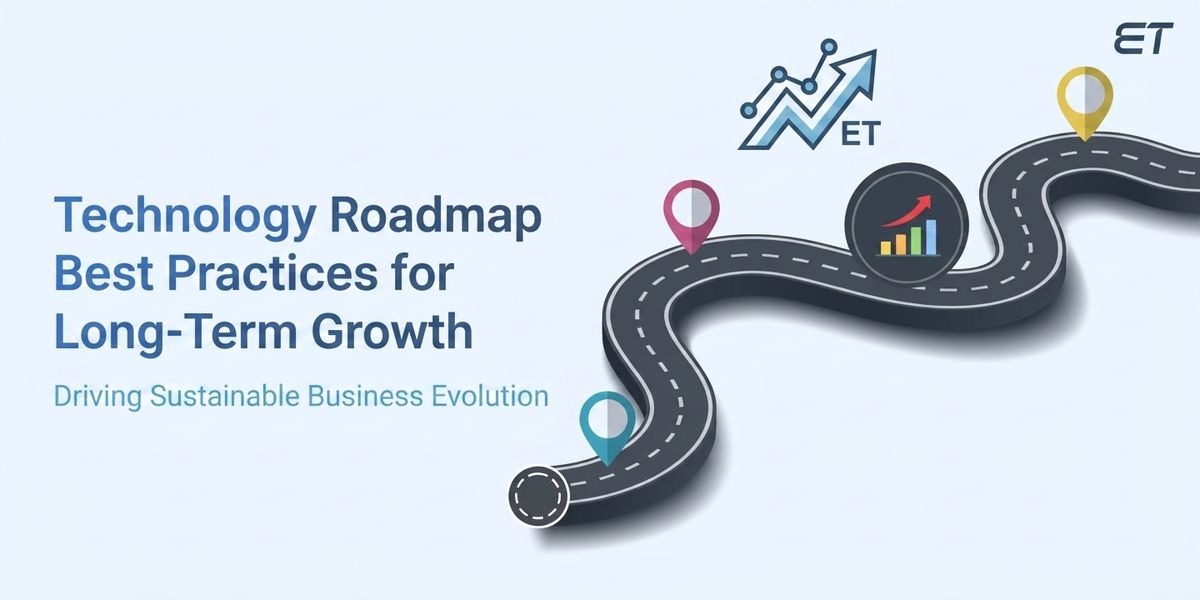
The businesses that get the most value from IT services outsourcing companies USA wide tend to treat the relationship as a long-term technology partnership, not a transactional vendor arrangement. That shift in mindset changes how the engagement is structured from the very beginning.
Rather than only reacting to whatever technical fire is burning that week, forward-thinking businesses bring their outsourced partner into quarterly planning conversations, sharing upcoming product roadmaps and business goals so the technical team can proactively flag scaling risks, security gaps, or infrastructure limitations before they become urgent.
This kind of proactive planning is exactly what separates a genuine technology partner from a reactive vendor, and it is a defining feature of the strongest engagements All Talentz builds for clients across the US, UK, and Canada, technical talent that grows with your roadmap, not just talent that responds to your ticket queue.
Remote-First Talent: Why Location Matters Less Than It Used To
One quiet shift behind the rise of IT services outsourcing companies USA wide is how thoroughly remote-first work has reshaped what “local talent” even means. A decade ago, a business in Denver or Raleigh-Durham was largely limited to hiring engineers willing to relocate or commute into a physical office. Today, that same business can build a technical team spanning multiple states, or blend domestic and nearshore talent, without anyone changing zip codes.
This shift matters directly for how businesses should evaluate outsourcing providers in 2026. A provider’s physical headquarters matters far less than its ability to build a genuinely cohesive, well-managed remote team with strong communication practices, clear documentation habits, and reliable overlap hours with your business. Some of the strongest engineering pods now blend a senior architect based in California, a backend developer in Texas, and a QA specialist working nearshore, all coordinated seamlessly through modern project management and communication tools.
For businesses evaluating IT services outsourcing companies USA wide, the practical takeaway is simple: ask about team structure and communication process before asking about office locations. A well-managed distributed team consistently outperforms a co-located team with weak processes, and the businesses getting the best results from outsourcing in 2026 have already internalized that lesson.
Bringing It All Together
Choosing among IT services outsourcing companies USA wide is not a decision to make from a single online list or a quick price comparison. It requires understanding your actual technical needs, testing real providers against real trial projects, confirming security and compliance practices upfront, and structuring contracts that protect your business if the relationship ever needs to end.
The businesses winning with outsourced IT in 2026 are the ones treating their outsourcing partner as an extension of their own technical leadership, brought into planning conversations, held accountable to clear metrics, and trusted with real responsibility because that trust was earned through a careful, deliberate vetting process from the very first conversation.
That is exactly the standard All Talentz holds itself to with every client across the United States, the United Kingdom, and Canada, because the businesses that get outsourcing right do not just fill a technical gap. They build a lasting competitive advantage.
From a founder in Denver fielding a 2 a.m. server alert to a scaling fintech in New York preparing for a compliance audit, the underlying need is the same: technical talent that shows up prepared, communicates clearly, and treats your systems with the same care an in-house engineer would. That is the bar All Talentz sets for every engagement, in every region it serves, because reliable, well-vetted technical talent should never be the reason a growing business misses its next milestone.
Frequently Asked Questions About IT Services Outsourcing Companies USA
IT services outsourcing companies USA businesses hire typically fall into a few categories: custom software development shops, managed IT and cybersecurity providers, cloud infrastructure specialists, and staff augmentation firms that place individual engineers inside client teams. Before hiring, businesses should confirm the provider’s specific technical depth in their exact stack, security certifications like SOC 2, and whether references exist from similarly sized companies
Costs vary significantly based on engagement type and specialization. Hourly rates for general support are typically lower than rates for specialized cloud architects or cybersecurity engineers, and dedicated team or staff augmentation models generally offer more predictable monthly costs than open-ended hourly billing for long-term engagements.
Yes, when the provider follows proper security protocols, including SOC 2 compliance, strict access controls, signed non-disclosure and data processing agreements, and documented incident response plans. Businesses in regulated industries should specifically confirm HIPAA, PCI-DSS, or GDPR familiarity depending on their customer base.
Staff augmentation places individual outsourced engineers directly inside your existing team and processes, typically managed by your internal leadership, while a fully managed project hands an entire scope of work to the outsourcing provider’s own project management and delivery team, with your business receiving milestones and deliverables rather than day-to-day task management.
With an established provider maintaining a pre-vetted talent bench, initial deployment can often happen within one to two weeks, though full productivity typically requires additional ramp-up time as engineers learn the specific codebase, tools, and business context.
Small and mid-sized businesses are actually some of the fastest-growing users of IT outsourcing, because it provides access to specialized expertise, cybersecurity, cloud architecture, DevOps, that would be far too expensive to hire full-time in-house at their current scale.
A strong contract should define scope of work, service-level agreements for response and resolution times, data security and confidentiality terms, pricing structure, intellectual property ownership, and a clear transition or offboarding plan for code and access credentials if the engagement ends.
Request a paid trial project scoped to a real, specific deliverable, review portfolio work relevant to your technology stack, and interview the actual engineers who would work on your account directly, rather than relying solely on a sales team’s claims or a written resume.
Healthcare, financial services, e-commerce, manufacturing, legal services, and real estate technology are currently seeing the fastest growth in IT outsourcing adoption, largely driven by compliance requirements, rapid digital transformation needs, and seasonal or growth-driven demand spikes.
Nearshore IT outsourcing means partnering with technical talent in a nearby, time-zone-aligned country, such as US companies working with development teams in Latin America. It is a strong option for companies needing real-time collaboration during agile development cycles without the cost of a fully domestic team.
AI is increasingly integrated into delivery workflows through automated code review, vulnerability scanning, and predictive infrastructure monitoring, accelerating how quickly outsourced teams can deliver work, while human engineers continue to handle architecture decisions and complex problem-solving that still require judgment.
Vague answers about security certifications, no willingness to offer a paid trial project, unclear pricing with hidden fees, no dedicated project manager, and an inability to provide references from similarly sized clients are all significant warning signs.
Established providers typically build overlapping working hours into engagement structures deliberately, scheduling core collaboration windows during shared business hours and using asynchronous tools like shared documentation and project boards to bridge remaining time zone gaps.
Choosing based on price alone, without verifying technical depth, security practices, and communication processes, is the most common and costly mistake, frequently leading to missed deadlines, security vulnerabilities, or the need to redo work with a different provider.
All Talentz runs structured technical assessments, verifies real project experience relevant to a client’s specific technology stack, conducts reference checks, and confirms security awareness and communication skills, ensuring every engineer presented to a client has already been thoroughly evaluated rather than screened only by a resume.
Yes, and blended models combining a core in-house team with an outsourced pod handling specialized or overflow work are increasingly the norm in 2026, provided clear communication rhythms, shared tools, and defined roles are established from the start of the engagement.
Contract lengths vary from short, fixed-scope projects lasting a few weeks to ongoing dedicated team engagements lasting a year or more, and the strongest providers offer flexible terms that allow scaling team size up or down as project needs evolve.