Most articles about work from home productivity tips are written for the individual remote worker. This one is written for the manager trying to get consistent, high-quality output from a team that is not in the same room. The challenges are different, and the solutions are different too. If you have already read our earlier post, How To Maintain Productivity While Working From Home, that piece covers the individual perspective. This guide covers the manager's side: the specific work from home productivity tips that actually change how a distributed team performs, not just how one person manages their own day.
Stop Managing Hours and Start Managing Output
The first and most important shift in applying work from home productivity tips at a team level is moving away from monitoring time and toward measuring results. Stanford research consistently shows that remote workers produce more output per hour than their in-office counterparts, but only when the management approach matches the environment. Teams managed by hours logged tend to perform worse than teams managed by clearly defined deliverables.
In practice, this means defining what done looks like for every role, not just listing responsibilities. A clear deliverable has a deadline, a scope, and a measurable outcome. Without that clarity, remote workers fill the ambiguity with activity rather than output, and managers fill it with micromanagement, which compounds the problem.
This is one of the work from home productivity tips that feels obvious when stated but is consistently underimplemented. Most managers know they should manage by output. Fewer actually restructure their check-ins, reporting, and performance conversations to reflect that.
Build Communication Rhythms, Not Communication Volume
The Work From Home Productivity Tips That Fix Communication Without Overloading the Team
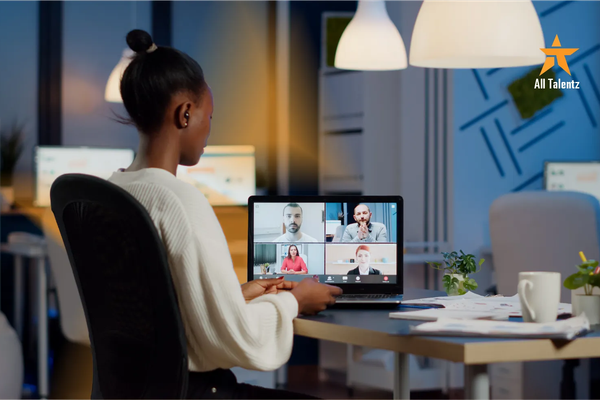
Distributed teams suffer from one of two communication failure modes: too little, which creates misalignment and isolation, or too much, which creates meeting fatigue and fragmented focus. Neither produces good output.
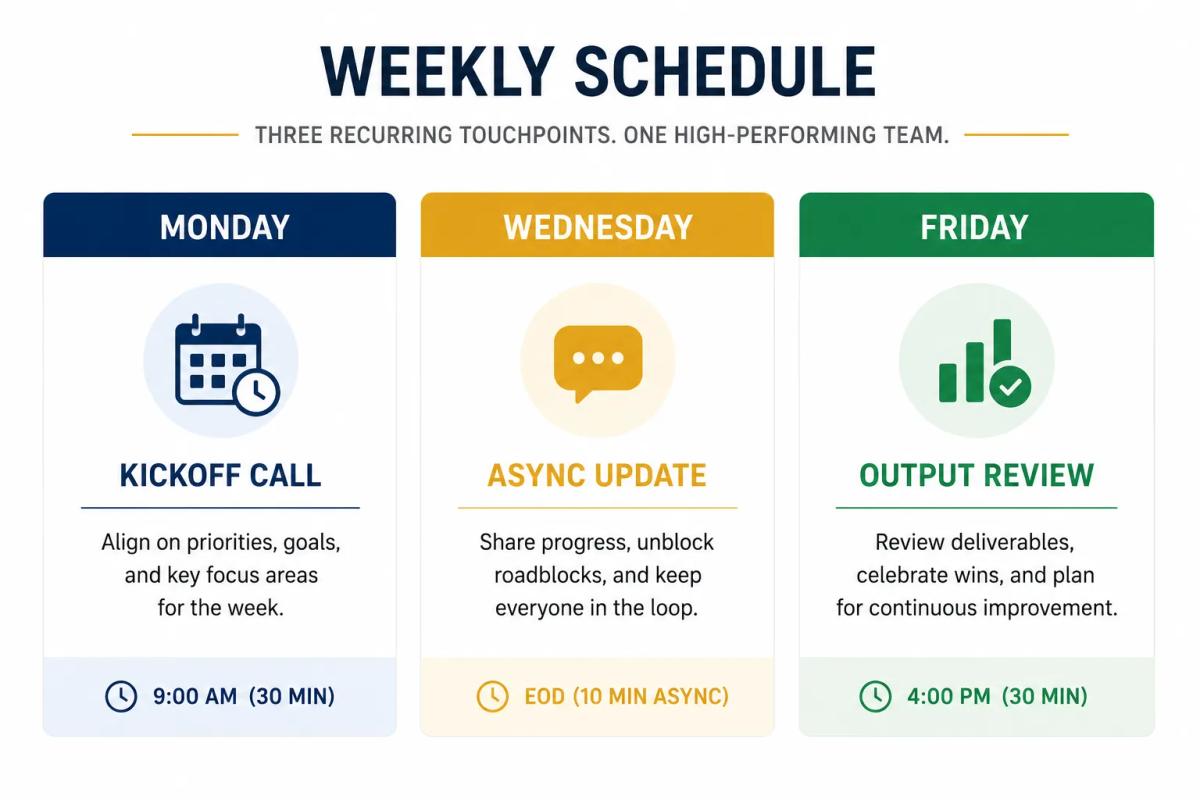
The most effective work from home productivity tips for communication are structural rather than volume-based. A fixed weekly rhythm, for example a Monday kickoff call, a mid-week async update, and a Friday output check, gives the team a predictable frame without filling their calendar. Outside that rhythm, the expectation should be async-first, meaning messages and questions go to a shared channel and get responded to within a defined window rather than immediately.
What this does for productivity is significant. Deep work requires sustained focus, which is impossible when a team member expects to be pulled into a Slack conversation at any moment. Structured communication protects that focus time while keeping everyone aligned on what matters.
Use Time-Blocking as a Team Practice, Not Just a Personal Habit
Time-blocking is often listed as a personal productivity technique, but its real power shows up when a whole team adopts it together. When everyone on a remote team knows that mornings are protected for deep work and afternoons are for calls and administrative tasks, scheduling conflicts drop, output quality improves, and the team stops feeling like they are constantly being interrupted. The Pomodoro Technique, which breaks focused work into 25-minute intervals separated by short breaks, is one of the most widely used individual applications of this principle and is easy to introduce to a remote team as a shared practice.
As a manager applying work from home productivity tips at the team level, your role is to protect the blocks you create. That means scheduling meetings during the designated windows rather than dropping them wherever a slot appears, and not expecting instant responses during focus blocks. The discipline has to come from the top for it to hold.
Build a Remote Team That Performs Consistently
Choose Tools That Reduce Friction, Not Ones That Add It
Tool sprawl is one of the quieter productivity killers in remote teams. When a team uses six different platforms for tasks that two would handle, the overhead of switching between apps, managing notifications, and maintaining context across systems becomes a genuine drag on output. Asana's remote work research consistently shows that the best-performing remote teams use fewer tools more intentionally, rather than more tools more sporadically.
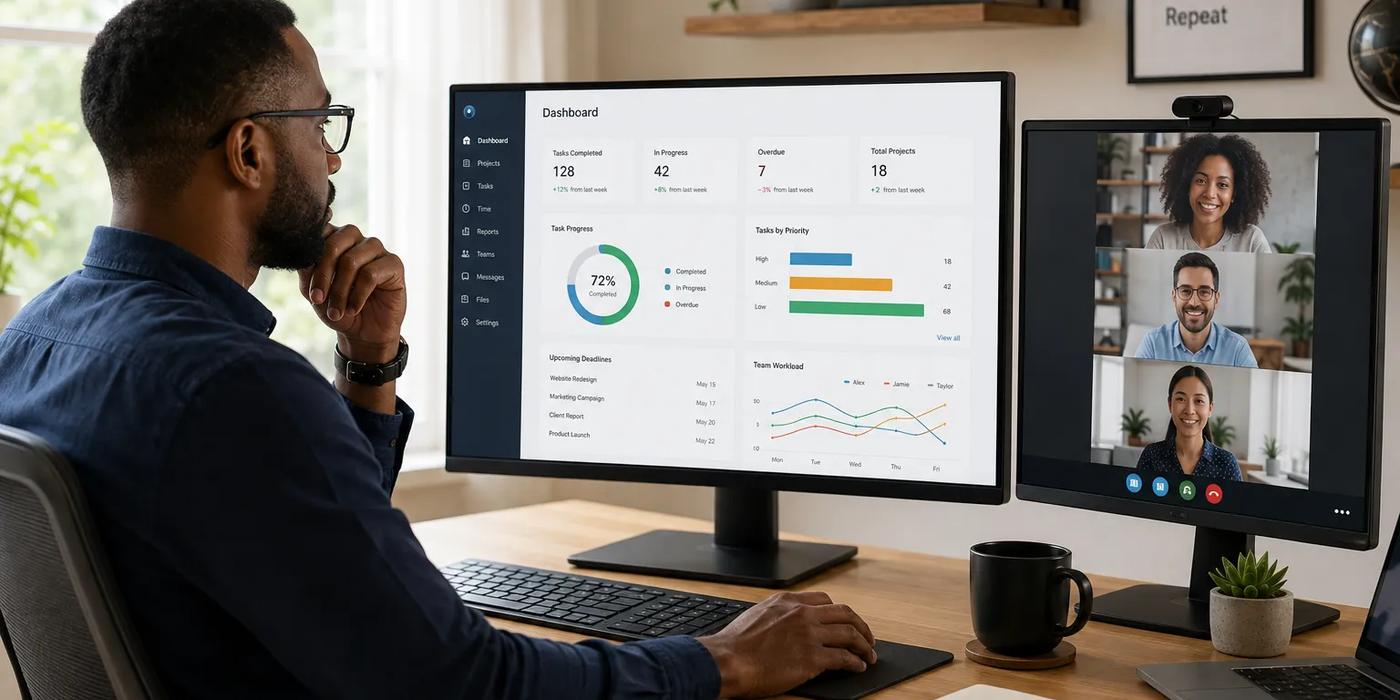
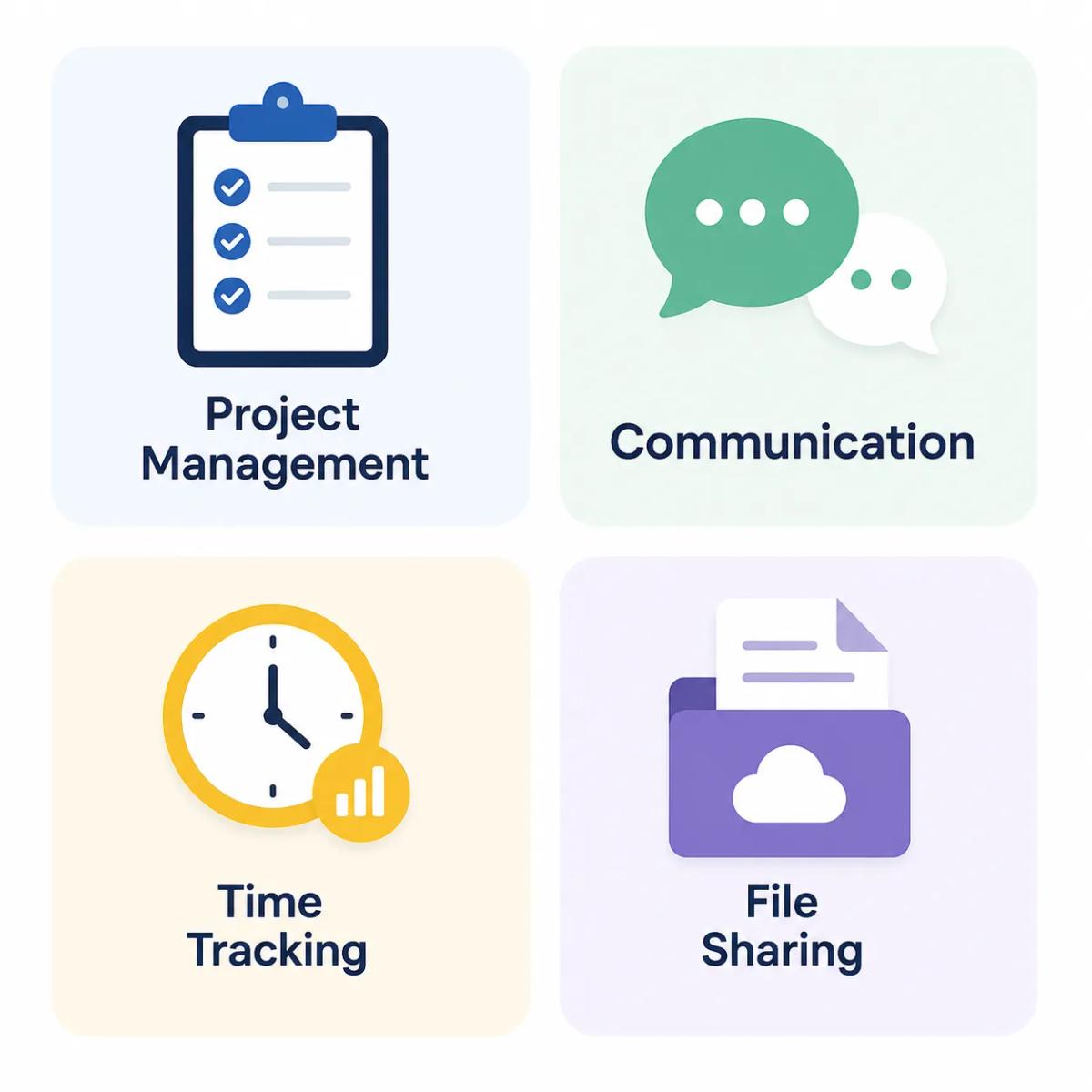
The work from home productivity tips that apply here are straightforward: one tool for project and task management, one tool for team communication, one for file storage and collaboration, and one for video calls. Beyond that, every additional tool needs a clear justification, because the switching cost compounds across the whole team every day.
Critically, the tools need to match the team's actual working style. A team with members across multiple time zones needs stronger async documentation practices than a team working the same hours. The tool stack should reflect how work actually flows, not how it flows in a head office.
Protect Focused Work Time as Actively as You Schedule Meetings
One of the most underused work from home productivity tips for managers is treating uninterrupted focus time as a meeting that cannot be cancelled. In a physical office, it is visible when someone is heads-down at their desk. In a remote environment, that signal disappears, and the result is that focus time gets eroded by messages, quick calls, and low-priority requests throughout the day.
The fix is structural: build focus blocks into the team calendar, make them visible to the whole team, and hold the boundary. For a deeper framework on how to sustain this as a long-term management practice, our guide on remote team management strategies covers the systems that work best for distributed teams over time.
Hire People Who Are Already Built for Remote Work
The most impactful of all work from home productivity tips for managers is one that happens before anyone starts: hiring people who are already equipped to work independently, communicate clearly in writing, and manage their own output without constant prompting.
This is not a universal trait. Some excellent professionals do their best work in a structured, in-person environment and genuinely struggle with the ambiguity of remote work. Hiring the wrong person for a remote role and then applying productivity tips on top of that mismatch is a losing equation.
All Talentz screens every candidate specifically for remote-work competencies before presenting them to a client. Every professional we place across IT Tech, Healthcare, Finance and Accounting, Legal, Restoration, and Pest Control has been assessed for communication quality, self-direction, and the ability to work without physical supervision before they ever sit down with a client.
For the broader business case on why the hiring decision is the most important productivity lever of all, see our posts on the benefits of hiring remotely and the financial ROI of remote hiring, which cover what well-matched remote hires actually deliver in measurable terms.
Hire Professionals Already Built for Remote Work
Conclusion
The work from home productivity tips that actually move the needle for managers are not the ones about personal habits or morning routines. They are the structural decisions: managing output instead of hours, building communication rhythms rather than communication volume, protecting focus time the same way you protect meetings, and hiring people who are genuinely equipped for independent remote work.
Each of these tips works in isolation. They work considerably better together, and they work best when the people on the team are already suited to the environment. That last point is the one that is hardest to fix after the fact, which is why getting the hiring right from the start is the most important investment a manager of a distributed team can make.
All Talentz exists to make that part easier. Every professional we place is pre-vetted for remote competency and supported with structured onboarding from day one.
The most effective work from home productivity tips for managers include managing by output rather than hours, building structured communication rhythms, protecting focused work blocks, standardizing a lean tool stack, and hiring people who are already equipped to work independently in remote environments.
Replace supervision with structure. Define clear deliverables for every role, build a regular communication rhythm so the team stays aligned, and measure output rather than activity. These work from home productivity tips remove the need for micromanagement because expectations and accountability are built into the system rather than enforced person by person.
A fixed weekly rhythm with a predictable cadence of check-ins is more effective than high-frequency ad hoc communication. Async-first communication outside of scheduled touchpoints protects focus time and reduces the meeting fatigue that degrades remote team productivity over time.
Significantly. Work from home productivity tips applied to the wrong hire produce limited results. Professionals who lack self-direction, written communication skills, or the ability to manage their own output in an unstructured environment will underperform regardless of what systems or tools the manager puts in place.
All Talentz screens every candidate for remote-work competencies before placement, ensuring that the people joining your team are already equipped to work independently, communicate clearly, and deliver without close supervision. Every placement is also supported with structured onboarding and a 30-day replacement guarantee.
The most productive remote teams use a minimal, intentional tool stack: one project management tool, one communication platform, one file collaboration tool, and one video call tool. Adding tools beyond this typically increases switching costs and reduces focus without adding equivalent value.