
Skills-based remote hiring means selecting remote employees by what they can prove they can do, not by degrees, job titles or pedigree. It matters because it widens your talent pool across the US, UK and Canada while reducing bad hires. Any growing company hiring across these three markets should adopt it, starting with clear skills criteria and a structured assessment.
What Is Skills-Based Remote Hiring?
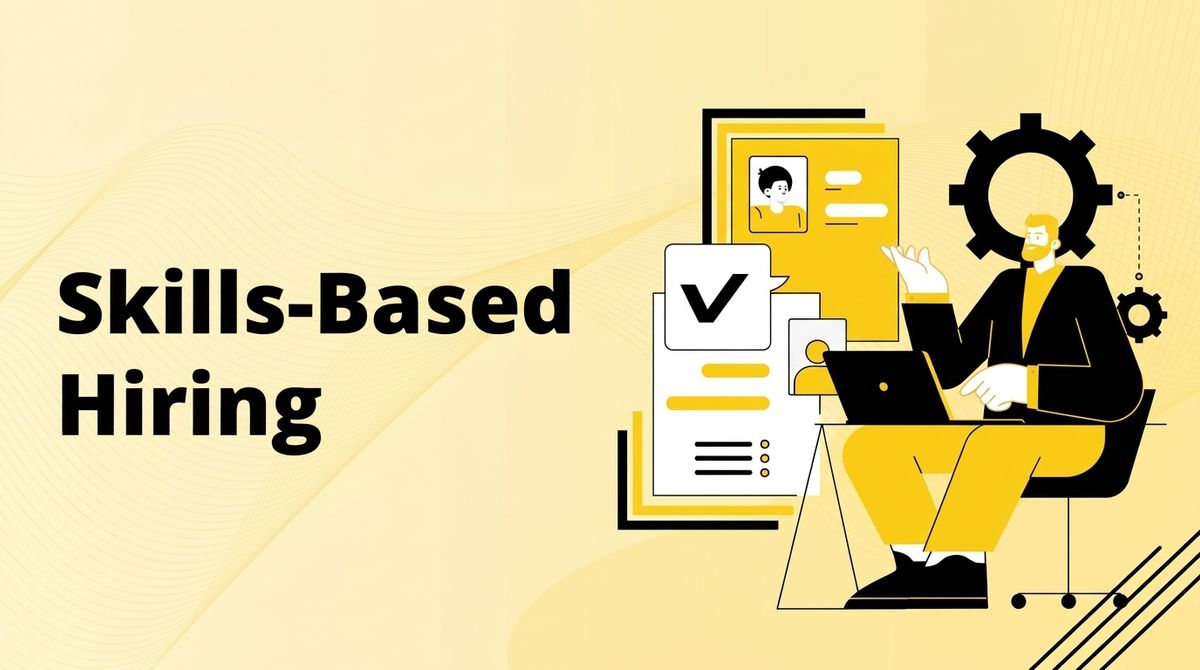
Skills-based remote hiring is a recruitment approach that evaluates candidates on verified, job-relevant skills through work samples, structured assessments and competency interviews, then hires them to work remotely from any approved location.
Traditional hiring leans on proxies: a university name, years of experience or a previous employer's brand. Those proxies are easy to screen on but weak predictors of performance. A skills-based process replaces them with direct evidence.
The approach has momentum. The World Economic Forum's Future of Jobs Report 2025 found that employers expect roughly 39% of workers' core skills to change by 2030. If skills change that fast, a degree earned a decade ago says little about what a candidate can do today.
A Toronto-based SaaS company needs a customer success lead. Instead of requiring a business degree, it asks finalists to review a mock at-risk account and write a recovery plan. The best plan comes from a candidate based in Manchester with a non-traditional background, and she outperforms the team average within two quarters.
Key Takeaways
- Skills-based hiring tests real ability instead of relying on degrees or job titles.
- It expands your talent pool across the US, UK and Canada.
- Work samples and structured interviews predict job performance better than résumé screening alone.
- Remote hiring across borders adds legal, tax and payroll steps you must plan for.
- A clear five-step process makes the approach repeatable.
Benefits of Skills-Based Remote Hiring
A wider, more diverse talent pool. Dropping unnecessary degree filters opens roles to self-taught developers, career changers, bootcamp graduates and military veterans. Several US states, including Maryland, have removed degree requirements from many public-sector roles to reach this wider pool.
Better quality of hire. Structured assessments reduce gut-feel decisions. Hiring managers compare candidates against the same scorecard, which makes decisions fairer and easier to defend.
Faster time to productivity. Candidates who have already demonstrated the core task need less ramp-up. Your team spends less time correcting mismatched hires.
Lower hiring cost over time. A single bad hire can cost a significant share of annual salary once you count recruiting fees, lost output and re-hiring. Skills verification cuts that risk.
Stronger retention. People hired for demonstrated strengths tend to feel better matched to their roles, which supports engagement and longer tenure.
Use cases: software and data roles, digital marketing, customer support, finance operations, design, project management and AI-enabled roles where tools evolve quickly.
Ready to hire on skills, not guesswork? All Talentz helps companies build skills-verified shortlists across the US, UK and Canada. Talk to our team to get started.
Step-by-Step Guide: How to Run Skills-Based Remote Hiring
Step 1: Define the Skills the Role Actually Needs
Start by listing five to eight skills that determine success in the first 12 months. Separate must-have skills from nice-to-haves, and remove degree requirements unless a licence legally demands one.
Why it matters: Vague job descriptions attract vague applicants and bias screening.
Expert tip: Interview your top performers and ask which skills drive their results. Use a skills framework such as SFIA for technology roles or O*NET in the US as a reference point.
Step 2: Write a Skills-First Job Post
Lead with outcomes and required skills. State the remote policy, time zone overlap, and which countries you can hire in.
Why it matters: Clear location and pay information reduces drop-off and prevents compliance surprises later.
Expert tip: Include a salary range. Pay transparency rules in several US states and growing UK and Canadian practice make this a trust signal as well as a legal consideration.
Step 3: Assess Skills with Work Samples
Use a short, paid or time-boxed task that mirrors real work. Add a structured interview with the same questions for every finalist.
Why it matters: Work samples show how a person thinks, communicates and delivers in a remote context.
Expert tip: Keep tasks under two to three hours and score them with a written rubric. Platforms such as HackerRank, Codility, TestGorilla and Vervoe can support technical and role-based testing.
Step 4: Verify Credentials, References and Right to Work
Confirm identity, references and any licences. Check right to work in the candidate's country of residence.
Why it matters: Skills evidence is only useful when paired with legal eligibility to work.
Expert tip: In the UK, right-to-work checks apply to employees. In Canada, confirm status for foreign nationals, and note that programs like the Global Talent Stream exist for relocating specialists. In the US, employers complete Form I-9 for employees.
Step 5: Onboard, Pay and Measure
Choose a compliant hiring model: local entity, employer of record (EOR) or independent contractor where the work genuinely qualifies. Set 30-60-90 day goals tied to the original skills list.
Why it matters: Strong onboarding converts a good selection into good performance.
Expert tip: Track quality of hire, time to hire and 12-month retention, then feed results back into your scorecard.
Skills-Based Hiring vs Traditional Hiring
| Factor | Skills-Based Hiring | Traditional Hiring |
|---|---|---|
| Features | Work samples, scorecards, competency interviews | Résumé screening, degree filters, unstructured interviews |
| Pricing | PricingModerate upfront cost for assessments, lower mis-hire cost | Lower upfront cost, higher risk of costly mis-hires |
| Pros | Wider pool, fairer, stronger evidence of ability | Familiar, fast to screen, easy for recruiters |
| Cons | Needs design effort and calibrated rubrics | Rewards pedigree over performance, narrows the pool |
| Ideal User | Remote-first and fast-growing teams | Heavily regulated roles with mandatory credentials |
| Best Use Cases | Tech, marketing, support, operations, AI roles | Medicine, law, engineering licences |
Common Mistakes to Avoid
- Keeping degree filters in your ATS. The problem: automated screens reject strong candidates before a human sees them. The impact: a shrinking pool and missed talent. The fix: audit your applicant tracking system and remove non-essential degree rules.
- Using unscored assessments. The problem: reviewers rely on impressions. The impact: bias creeps back in. The fix: build a rubric with weighted criteria before you see any submissions.
- Over-long take-home tests. The problem: strong candidates withdraw. The impact: you hire from those with the most free time, not the most skill. The fix: cap tasks at a few hours and pay for longer ones.
- Ignoring cross-border compliance. The problem: misclassifying workers or skipping tax registration. The impact: penalties and back taxes. The fix: use a compliant model such as an EOR and get local advice. In the UK, check IR35 status for contractors.
- Skipping time zone planning. The problem: no shared working hours. The impact: slower collaboration. The fix: define a minimum overlap window, for example four hours between US Eastern and UK time.
Want a compliant, skills-verified hiring process? Speak with All Talentz about sourcing and vetting talent across all three markets.
Expert Insights and Industry Trends
Skills over credentials is becoming mainstream. LinkedIn's Economic Graph research has repeatedly highlighted that a skills-first approach can significantly broaden the pool of qualified candidates compared with title- and degree-based searches.
AI is changing the skills mix. The WEF report points to rapid growth in demand for AI, big data and cybersecurity skills, alongside analytical thinking and resilience. Employers should assess how candidates learn, not only what they already know.
Remote is now a permanent option. Gartner and other analysts continue to report that hybrid and remote arrangements are a lasting feature of knowledge work, which keeps competition for global talent high.
Emerging best practice: pair AI-assisted screening with human-reviewed work samples, and audit tools for bias regularly.
Related Topics You Should Also Know
- How to build a skills-based job description
- Employer of record vs independent contractor
- Remote hiring compliance in the US, UK and Canada
- How to design a fair technical assessment
- Pay transparency laws for remote roles
- How to run asynchronous interviews
- Time zone strategy for distributed teams
- Onboarding remote hires in the first 90 days
Frequently Asked Questions About Skills-Based Remote Hiring: US, UK & Canada
Skills-based hiring selects candidates based on demonstrated abilities, assessed through tests, work samples and structured interviews, rather than degrees or job titles.
Yes. It is generally encouraged because structured, job-related criteria support fair hiring. You must still follow local anti-discrimination, privacy and right-to-work laws.
Use timed work samples, live problem-solving sessions and structured video interviews scored against a rubric. Verify references and identity before an offer.
Often yes, through an employer of record or compliant contractor arrangement. The right option depends on the role, the country and the working relationship, so seek local advice.
Yes. For senior hires, use case studies, strategy presentations and reference checks focused on outcomes achieved.
Most teams complete a well-run process in three to six weeks. Pre-vetted talent pools can shorten this considerably.
Popular options include HackerRank, Codility, TestGorilla and Vervoe. Choose based on role type and candidate experience.
Conclusion: Skills-Based Remote Hiring US, UK & Canada
Skills-based remote hiring helps you find stronger candidates across the US, UK and Canada by testing real ability rather than credentials. Define the skills, assess them fairly, verify eligibility and onboard with a compliant model. Your next step is to audit one open role and rewrite it around skills.
Build your remote team on proven skills. Contact All Talentz today to access vetted, skills-verified talent in the US, UK and Canada.