
Picture two founders on the same street in the same year. One spends six months and a small fortune trying to hire a single senior developer locally. The other picks up the phone, calls a staffing partner, and has a fully vetted, English-fluent development team working within three weeks, at a fraction of the cost. Only one of those founders is still in business two years later. That’s not a coincidence. That’s outsourcing popularity playing out in real time.
Outsourcing popularity isn’t a buzzword. It’s a measurable, accelerating shift in how businesses of every size build their teams. This guide breaks down exactly why outsourcing has become so popular, what the data says, which roles are driving the surge, and how a company, anywhere in the US, UK, or Canada, can ride this wave instead of getting left behind by it. And when you’re ready to act on what you learn here, All Talentz is the recruitment and outsourcing partner built to help you do it right.
Outsourcing Popularity by the Numbers
Outsourcing popularity is not a feeling, it’s backed by hard numbers, and the trend line only points up.
- The US outsourcing industry, valued at roughly $300 billion in recent years, is on track to surpass $500 billion by 2030.
- A large majority of American businesses, roughly two out of every three, now outsource at least one department, and most of those companies plan to expand their use of outsourced talent, not shrink it.
- Close to half of American businesses offshore at least part of their workforce, reflecting how tightly outsourcing popularity and offshoring popularity are now linked.
- The global outsourcing market carries well over $90 billion in total contract value today, with broader global spending estimates running into the hundreds of billions once every outsourcing category is included.
- The majority of businesses that outsource say cost savings are the top drivers, but it’s no longer the only one, talent access and speed now rank right alongside it.
- Small businesses are catching up fast: a growing share now outsource at least one function, and more than half say they plan to start or expand outsourcing soon.
- Large enterprises are almost universally engaged, the overwhelming majority of the world’s biggest companies maintain active IT outsourcing contracts alone.
Curious where your business stands compared to competitors already outsourcing? Get a free benchmarking call with All Talentz.
Why Outsourcing Popularity Keeps Climbing: The Core Drivers
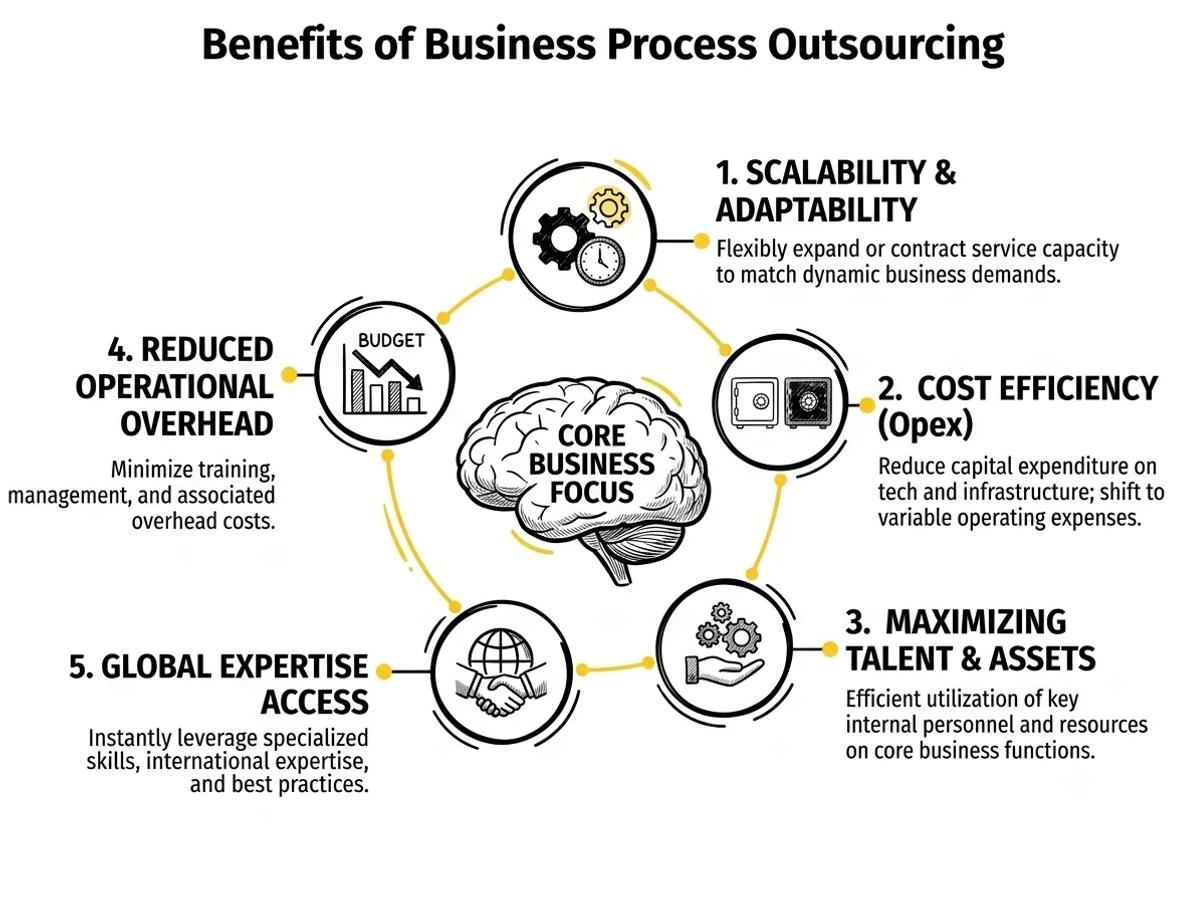
1. Cost pressure that isn’t going away
Labor is consistently one of the largest line items on a company’s income statement, often accounting for the majority of operating costs. Outsourcing, especially when combined with offshoring regions with more favorable wage structures, can meaningfully reduce that expense without cutting output. That single fact explains a huge share of outsourcing’s popularity across every industry and company size.
2. A widening skills gap
Specialized talent, senior developers, data scientists, compliance specialists, expert marketers, is scarce and expensive in most domestic markets. Outsourcing popularity has surged partly because it solves a problem that money alone can’t always fix locally: finding the right person, fast, anywhere in the world.
3. Economic and political uncertainty
Trade policy shifts, tariff volatility, and interest rate swings have all pushed businesses to look for more flexible cost structures. Outsourcing gives companies a way to scale labor up or down without the long-term fixed commitment of a full in-house department, which has made it an increasingly popular hedge against a genuinely uncertain economy.
4. The normalization of remote work
Once companies proved, at scale, that remote teams could perform at a high level, the geographic argument against outsourcing largely evaporated. If a domestic employee can do great work from a home office, a vetted offshore professional can too, and that realization has been a massive accelerant of outsourcing popularity since the shift to distributed work became mainstream.
5. Technology that makes distance irrelevant
Project management platforms, cloud tools, and AI-assisted collaboration software have closed the operational gap between an in-house team and an outsourced one. Businesses can now monitor performance, communicate in real time, and manage workflows across time zones almost as easily as they can down the hall.
The Story Behind Outsourcing’s Rise: A Short History
Outsourcing’s popularity didn’t appear overnight. Offshoring itself traces back to early twentieth-century multinational companies building manufacturing and customer bases abroad. The deliberate strategy of outsourcing specifically to cut costs took shape in the 1960s and 1970s, when major American technology firms began moving manufacturing, and eventually IT functions, to lower-cost locations. What started as a manufacturing play has expanded, decade by decade, into nearly every business function: customer service, tech support, product design, marketing, finance, and now increasingly AI-supported knowledge work.
Outsourcing Today: What’s Actually Driving the Boom Right Now
Outsourcing today looks nothing like outsourcing a decade ago. It has moved well beyond factory floors and call centers into highly skilled, highly strategic territory. Outsourcing today is defined by:
- Strategic, whole-function outsourcing. Businesses are no longer outsourcing single tasks, they’re outsourcing entire finance departments, entire marketing functions, and entire HR operations.
- AI-augmented delivery. Outsourced teams increasingly use AI tools to work faster and more accurately, multiplying the value a single outsourced professional can deliver.
- Rising demand for niche specialists. Data analysts, automation specialists, and AI trainers are among the fastest-growing outsourced roles, a sharp departure from the purely cost-driven outsourcing of the past.
- Hybrid workforce models. Most companies now blend in-house and outsourced staff deliberately, rather than treating outsourcing as an all-or-nothing decision.
Want to see what “outsourcing today” looks like inside your industry? Schedule a free strategy session with All Talentz.
In-House vs. Outsourced: Why More Businesses Are Choosing to Outsource
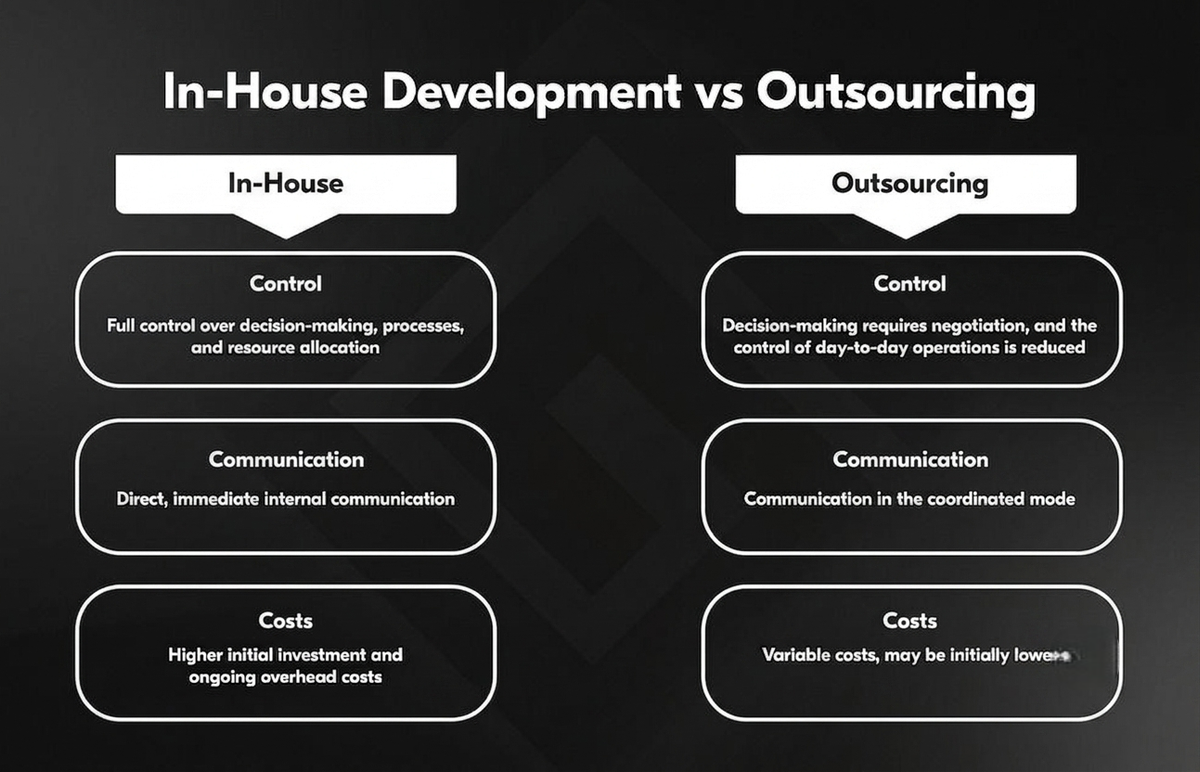
The decision between building an in-house team and outsourcing used to be framed as a trade-off between control and cost. That framing is outdated.
Cost: In-house hires carry salary, benefits, payroll tax, office space, and equipment costs. Outsourcing collapses most of that into a single predictable line item.
Speed: Domestic hiring for a specialized role can take months. A staffing partner can typically place a fully vetted outsourced professional in weeks.
Flexibility: Outsourced teams can scale up for a busy season and scale down afterward, something almost impossible to do responsibly with a full-time domestic headcount.
Access to talent: Outsourcing removes the geographic ceiling entirely. A company in a smaller US market is no longer limited to the talent pool within a 30-mile radius.
This is exactly why outsourcing popularity keeps rising even among companies that once swore they’d “never send jobs overseas.” The math, and the talent access, have simply become too compelling to ignore.
Which Roles Are Driving Outsourcing’s Popularity?
Outsourcing today spans a far wider range of roles than most people expect.
Virtual assistants
Outsourced virtual assistants handle scheduling, inbox management, research, and day-to-day operations, freeing up business owners and executives to focus on higher-value work, at a fraction of the cost of a domestic hire.
Accounting and bookkeeping
Modern outsourced accountants are fluent in cross-border tax and compliance rules, making it easier than ever for a business to find a qualified financial professional anywhere in the world.
Marketing and digital specialists
From graphic design to SEO and paid media management, outsourced marketing talent gives businesses access to specialized skills that would otherwise require multiple expensive domestic hires.
IT and technical support
Computing fundamentals are universal, an outsourced IT specialist can troubleshoot, maintain, and support systems just as effectively as a domestic hire, often around the clock.
Customer service
Outsourced, English-fluent customer service teams let businesses extend support hours, cut response times, and manage volume spikes without overloading an in-house team.
Developers and QA testers
Software development and quality assurance are now among the most commonly outsourced technical functions, driven by a global shortage of senior engineering talent.
Outsourcing Popularity Across the United States
Outsourcing popularity isn’t confined to one coast. Businesses across the country are adopting it for different reasons tied to their local economy.
- California (Santa Clara County, San Francisco): Tech-heavy outsourcing of software development and IT support.
- Texas (Harris County, Travis County): Rapid small-business adoption of outsourced admin, accounting, and marketing functions.
- New York (New York County): Financial services back-office and compliance outsourcing.
- Florida (Miami-Dade County): A growing hub for outsourced customer service and multilingual support teams.
- Illinois (Cook County): Logistics and supply-chain outsourcing tied to Chicago’s distribution networks.
- Georgia (Fulton County): Shared-services and marketing outsourcing centered on Atlanta.
Outsourcing Popularity in the United Kingdom
UK businesses have embraced outsourcing popularity with equal enthusiasm, shaped by the country’s own economic pressures. In Greater London, financial and professional services firms lean heavily on outsourced back-office and compliance functions.
Greater Manchester and West Yorkshire (Leeds) have grown into shared services and customer-support outsourcing hubs.
The West Midlands, including Birmingham, continues a long tradition of manufacturing-linked outsourcing, while Scotland’s financial technology sector, centered on Edinburgh and Glasgow, increasingly outsources development and support functions. Across all these regions, UK businesses cite the same core drivers as their American counterparts: cost control, talent access, and flexibility in an uncertain economy.
Outsourcing Popularity in Canada
Canadian businesses are outsourcing at a pace that mirrors their US and UK peers. Ontario, and Toronto in particular, remains the country’s largest hub for outsourced financial and IT services. British Columbia, centered on Vancouver, has become a magnet for outsourced technology and creative talent. Alberta, especially around Calgary, has grown its use of outsourced engineering and administrative support as energy companies manage cost volatility.
Quebec, led by Montreal, has built a strong outsourced, bilingual customer-service sector that serves both Canadian and US clients. This coast-to-coast adoption underscores that outsourcing popularity is a North American story, not just a US one.
Where Companies Go to Outsource
Outsourcing popularity has also concentrated around a handful of global talent hubs, each with a distinct advantage:
- The Philippines is widely considered a top outsourcing destination, thanks to a strong English-speaking talent pool, deep cultural compatibility with Western businesses, and a mature outsourcing industry supported by government incentives.
- India remains a major hub for technology and engineering outsourcing, backed by a large pool of English-speaking graduates and decades of IT-sector experience.
- South Africa has grown rapidly as an outsourcing destination, offering strong English proficiency, excellent universities, and favorable time-zone overlap with both European and US business hours.
Avoiding the Traps That Undermine Outsourcing’s Popularity
Outsourcing’s popularity can work against a business if it’s approached carelessly. The most common mistakes include:
- Chasing the lowest price instead of the right fit. The cheapest provider is rarely the best long-term value.
- Skipping documented workflows. Without clear processes, even the most talented outsourced professional will struggle to deliver consistent results.
- Under-investing in communication systems. Regular check-ins and clear channels are what separate a smooth outsourcing relationship from a frustrating one.
- Ignoring cultural fit. Outsourced teams perform best when they’re genuinely integrated into company culture, not treated as an afterthought.
How to Start Outsourcing the Right Way
- Identify outsource-ready tasks first, repetitive, well-defined, non-core work is the easiest and safest starting point.
- Partner with a reputable outsourcing and recruitment firm that understands your industry and vets candidates thoroughly.
- Set clear KPIs from day one so success is measurable, not subjective.
- Invest in onboarding, treat outsourced hires like real team members, not disposable contractors.
A Closer Look at the World’s Favorite Outsourcing Destinations
Outsourcing popularity doesn’t spread evenly across the globe. It concentrates in a handful of countries that have built genuine competitive advantages for serving Western businesses.
Nigeria: the clear favorite
Nigeria has earned its reputation as the top choice for many US, UK, and Canadian companies. It’s the fifth-largest English-speaking country in the world, with English as one of its two official languages, a huge advantage for customer-facing and communication-heavy roles. Its universities produce large numbers of graduates in computer science, finance, accounting, and marketing every year, feeding a deep, renewable talent pipeline. Add a lower cost of living, strong cultural alignment with Western business norms, and dedicated government support for the outsourcing sector, including tax incentives and infrastructure investment.
India: the technology powerhouse
India built its outsourcing reputation on engineering and IT talent, backed by some of the world’s most respected technical universities. With well over 100 million English speakers, India offers enormous scale alongside strong technical depth, particularly for software development, IT support, and data-heavy roles.
South Africa: the rising contender
South Africa has climbed the outsourcing popularity rankings quickly. As part of the global Anglosphere, English proficiency is widespread, and its universities are considered among the strongest on the African continent. South Africa’s time zone overlaps well with both European and US business hours, and its cost of living remains low relative to Western markets, a combination that’s made it an increasingly popular choice for customer service, technical support, and creative roles alike.
Sector Spotlight: Where Outsourcing Popularity Is Growing Fastest
Financial services and accounting
Outsourced bookkeeping, tax preparation, and financial analysis have grown rapidly as more finance professionals worldwide become fluent in international accounting standards and cross-border compliance requirements.
Digital marketing and creative services
The rise of remote-first marketing teams has made outsourced graphic designers, SEO specialists, and paid-media managers some of the most in-demand outsourced roles today, since strong creative and analytical skill isn’t tied to any particular zip code.
Technology and software development
A persistent global shortage of senior engineers has pushed outsourcing popularity in software development to new highs, with businesses of every size now routinely building distributed engineering teams.
Customer experience and support
Outsourced, English-fluent customer service teams let businesses extend coverage hours, reduce response times, and handle demand spikes, without the cost of building a 24/7 domestic team from scratch.
The Economics Behind Outsourcing Popularity: A Simple Cost Comparison
Consider a mid-sized US business hiring a full-time specialist domestically versus outsourcing the same function:
- Domestic hire: Base salary, employer payroll taxes, benefits, office space, equipment, and recruiting costs typically add 25–40% on top of salary alone.
- Outsourced hire: A single, predictable monthly fee usually covers the equivalent work, often at a meaningfully lower total cost, while eliminating most of the overhead categories above entirely.
This gap is the single biggest reason outsourcing popularity keeps climbing, especially among small and mid-sized businesses that don’t have the balance sheet to absorb high fixed labor costs the way a large enterprise can.
Common Objections to Outsourcing; Answered
Even with outsourcing popularity at record highs, plenty of business owners still hesitate. Here’s an honest look at the most common objections.
“I’ll lose control over quality.” In practice, quality control comes down to process, not location. Clear documentation, regular check-ins, and a vetted provider consistently deliver quality on par with, and sometimes better than, a rushed local hire.
“Communication will be a nightmare.” Modern collaboration tools and reasonable time-zone planning solve most of this. Many outsourcing hubs, including the Philippines and South Africa, offer significant working-hour overlap with US and UK business hours.
“It feels risky for my brand.” The real risk isn’t outsourcing itself; it’s outsourcing without a vetting process. A reputable partner reduces this risk dramatically compared to sourcing independently through freelance marketplaces.
“My team will feel threatened.” Transparent communication about why and how a company is outsourced, paired with a clear explanation of which roles are staying in-house consistently reduces internal anxiety and turnover risk.
Every one of these objections is solvable with the right process and the right partner, which is exactly why outsourcing popularity keeps climbing even among businesses that were initially skeptical.
Outsourcing Popularity and the Small Business Owner
Small business owners face a specific version of the outsourcing popularity story. With limited cash flow and no dedicated HR department, a bad domestic hire can be financially devastating. Outsourcing popularity among small businesses has surged because it offers a lower-risk way to test a role, access a skill the owner doesn’t have time to learn, and free up hours to focus on sales and growth. A solo founder handling their own bookkeeping, social media, and customer emails can outsource all three for less than the cost of one part-time domestic employee and get specialist-level work in return.
Why All Talentz Leads the Outsourcing Popularity Wave
All Talentz was built for exactly this moment. As outsourcing popularity accelerates across the US, UK, and Canada, businesses need a partner who does more than fill a role, one that vets talent rigorously, manages compliance, and treats every placement as a long-term relationship instead of a transaction. That’s the All Talentz difference: recruitment and outsourcing expertise that turns a popular trend into a genuine competitive advantage for your business.
| Region | Leading Outsourcing Hub | Primary Outsourced Functions |
|---|---|---|
| US West Coast | Santa Clara County, CA | Software development, IT support |
| US South | Harris County, TX / Fulton County, GA | Admin, marketing, shared services |
| US Northeast | New York County, NY | Financial back-office, compliance |
| US Midwest | Cook County, IL | Logistics, supply chain |
| UK | Greater London / Greater Manchester | Financial services, shared services |
| Canada | Ontario (Toronto) / British Columbia (Vancouver) | Financial services, technology, creative |
This regional pattern shows why outsourcing popularity isn’t a single national story, it’s dozens of local stories, each shaped by the industries already anchored in that region.
What Outsourcing Popularity Means for the Next Five Years
Every credible market projection agrees on direction, even if the exact figures vary: outsourcing popularity is going to keep climbing, not plateau. A few specific shifts are worth watching closely.
Consolidation among outsourcing providers. As demand grows, businesses will increasingly favor established, accountable partners over fragmented freelance marketplaces, rewarding providers who can prove consistent quality and compliance at scale.
Deeper integration of AI into outsourced workflows. Expect outsourced professionals to increasingly work alongside AI copilots, multiplying output per person and reshaping the economics of outsourcing yet again.
Growing demand for hybrid, blended teams. Rather than choosing between fully in-house or fully outsourced, more businesses will build permanent hybrid structures, treating outsourced talent as a standing part of the org chart rather than a temporary fix.
Expansion beyond traditional roles. As trust in outsourced talent grows, expect popularity to keep expanding into more senior, more strategic positions, including finance leadership support, product management, and data science.
Increased scrutiny on compliance and ethics. As outsourcing scales, expect more businesses, and more customers, to ask pointed questions about how outsourced workers are treated, making a transparent, ethical partner an increasingly important competitive advantage.
Internal and External Resources on Outsourcing Popularity
For a deeper look at the human impact behind these numbers, read our companion guide, Outsourcing and Its Impacts: How Global Talent Is Reshaping the US Workforce in 2026, which unpacks exactly how outsourcing popularity translates into real job market outcomes across US, UK, and Canadian regions. For a practical, step-by-step look at how outsourcing works in 2026, see Outsourcing Today: The Complete 2026 Guide for Businesses Building a Global Workforce.
Frequently Asked Questions About Outsourcing Popularity
A combination of persistent cost pressure, a widening domestic skills gap, economic uncertainty, and the normalization of remote work has made outsourcing more practical and more accepted than ever. Businesses no longer see it as a last resort, they see it as a smart, standard part of building a workforce.
No. While large enterprises were early adopters, small and mid-sized businesses are now among the fastest-growing group of companies turning to outsourcing, largely because it lets them access specialized talent and control costs without the overhead of a full in-house department.
Cost savings remains the single most commonly cited reason businesses outsource, but talent access has become nearly as important. Many companies now outsource specifically because the skills they need simply aren’t available, or are prohibitively expensive, in their local market.
Industry projections consistently point toward significant growth, with the US outsourcing market alone expected to surpass $500 billion by the end of the decade, reflecting how deeply outsourcing popularity has become embedded in standard business strategy.
Virtual assistants, accountants and bookkeepers, marketing specialists and graphic designers, IT and technical support staff, customer service representatives, and software developers or QA testers are among the most frequently outsourced roles across every business size.
They’re closely related but not identical. Outsourcing means hiring an outside provider for a task; offshoring means that provider is based in another country. Much of today’s outsourcing growth includes an offshoring element, which is why the two trends often get discussed together.
The Philippines combines a large English-speaking, well-educated talent pool with strong cultural alignment to Western business norms, favorable time-zone overlap with US operations, and active government support for its outsourcing industry, a combination that’s hard to match elsewhere.
The most common mistakes are choosing a provider based on price alone, failing to document clear workflows, neglecting regular communication, and ignoring cultural integration between the outsourced team and the core company culture.
Once companies proved that remote employees could perform at a high level, the traditional argument against hiring outside the local market largely disappeared. That shift made outsourcing feel far less risky and dramatically accelerated its adoption.
Data analysis, marketing automation, and AI-training or AI-support roles are among the fastest-growing outsourced categories, as businesses look for talent that can work alongside AI tools to deliver faster, more accurate results.
Yes. Businesses in major hubs like Greater London, Greater Manchester, Toronto, and Vancouver are outsourcing at a pace that closely mirrors the United States, driven by the same core pressures: cost control, talent access, and flexibility.
With the right recruitment and outsourcing partner, businesses can often have a vetted professional or team in place within a few weeks, compared to the months a specialized domestic hire can take.
Not when it’s managed properly. Outsourcing popularity has actually pushed the industry toward higher standards, with reputable staffing partners investing heavily in vetting, skills testing, and ongoing quality management to meet rising demand.
Technology and software development, financial services, marketing, logistics, and customer service are currently seeing some of the fastest growth in outsourcing adoption across the US, UK, and Canada.
Clear KPIs set at the very start of the relationship, quality benchmarks, turnaround times, cost targets, and customer satisfaction metrics, are the most reliable way to measure whether an outsourcing arrangement is delivering real value.
A firm like All Talentz handles vetting, compliance, onboarding, and ongoing management, dramatically reducing the risk of a poor hire and freeing up business owners to focus on running their company instead of managing an unfamiliar hiring process.
The biggest misconception is that outsourcing is only about cutting costs on low-skill work. In reality, today’s outsourcing popularity spans highly skilled, highly strategic roles across nearly every business function.