

Job talent used to mean one thing: a qualified person with the right résumé applying to your open role. Not anymore. Job talent today is a living ecosystem active seekers, passive professionals, career-changers, freelancers, and boomerang hires, all available to the businesses smart enough to reach them before a vacancy even opens.
Job talent, in this new sense, is a strategic asset class. Companies in New York City, Chicago, Los Angeles, Toronto, Manchester, and Vancouver are no longer waiting for applications to trickle in. They are building always-on pipelines with All Talentz, a recruitment and outsourcing partner engineered for the way hiring actually works in 2026, across the United States, the United Kingdom, and Canada.
This guide is your roadmap to understanding, sourcing, evaluating, and securing job talent, whether you're hiring in a single zip code or building a distributed team that spans Ohio, Ontario, and the Home Counties of England.
The 2026 Job Talent Landscape
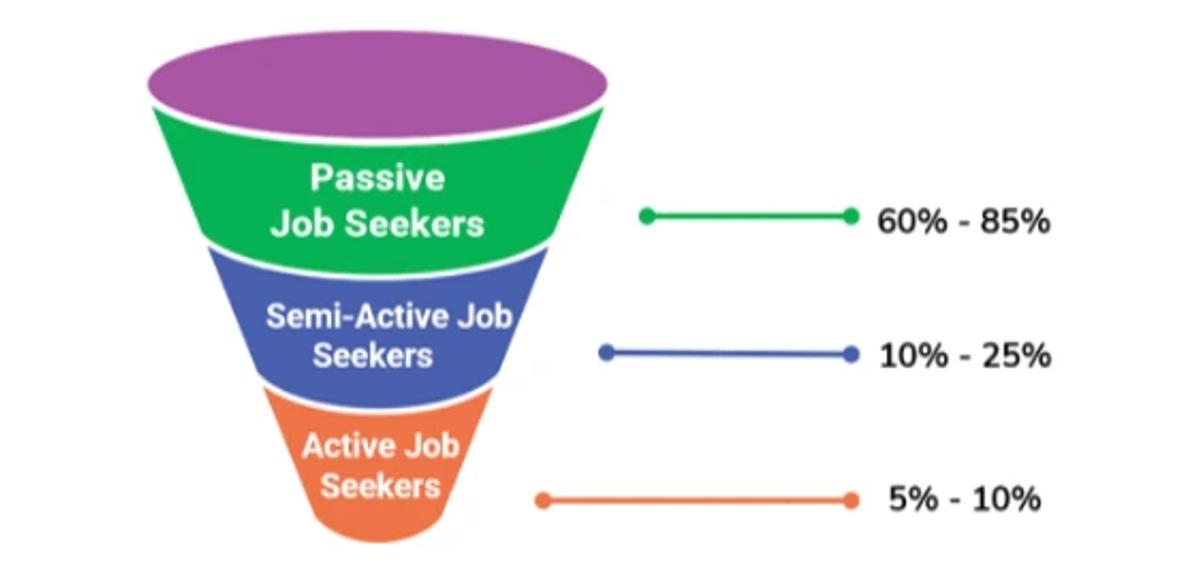
Job talent research consistently shows the 70-30 Rule: at any given moment, only 30% of the ideal candidate pool is actively job-hunting. The other 70%, often your highest performers, are employed, not looking, but open to the right conversation. If your hiring strategy is "post and pray," you are excluding yourself from 70% of the job talent market before you even start.
Job talent access has also been permanently reshaped by remote work. A firm in Austin, Texas can now hire a data scientist in Miami. A startup in Leeds can hire a marketer in Cardiff or Belfast. A retailer in Calgary can run its entire digital function from a remote team scattered across Alberta, British Columbia, and beyond. Geography no longer gatekeeps job talent, and companies that understand this build teams that are more skilled, more diverse, and meaningfully cheaper to run than those still stuck hiring only within driving distance of head office.
The 5 Categories of Job Talent Every Employer Should Know
Job talent breaks down into five distinct groups, and each requires a different outreach strategy:
- Active Job Seekers: Urgent, competitive, easy to reach, hard to win.
- Passively Open Professionals: the largest, highest-value segment; they need relationship-first outreach, which is exactly what All Talentz's engagement tools are built for.
- Career Transitioners: Ex-military logistics officers moving into supply chain, engineers moving into product, undervalued and often overlooked.
- Gig and Project Talent: An estimated 73 million Americans now freelance or work project-to-project, a category mirrored by growing freelance economies in the UK and Canada.
- Boomerang Talent: Former employees who left well and are ready to return, often the fastest and cheapest hire you'll ever make.
See which job talent category fits your open role, Request a Talent Match with All Talentz.
How to Evaluate Job Talent Beyond the Résumé
Job talent evaluation has moved past credentials. In 2026, the strongest professionals across Houston, Toronto, and London often didn't follow a traditional degree-to-job pipeline. they built skills through bootcamps, open-source work, freelance projects, and hands-on experience.
Job talent on the All Talentz platform is scored through a multi-dimensional framework:
- Verified skills assessments built with industry practitioners
- Work sample portfolios: real code, real campaigns, real writing
- Structured peer references instead of unreliable name-drop references
- Behavioral signal index: an AI-assisted professionalism and engagement score.
- Cultural fit indicators via validated psychometric mapping
Building a Year-Round Job Talent Pipeline
Job talent pipelines beat reactive hiring every time. The reactive scenario is brutally familiar: someone quits without notice, a growth target hits early, and suddenly you're posting a job with zero warm candidates and a 42–60 day time-to-fill draining real business value every day the seat sits empty.
Job talent pipelines solve this through three All Talentz tools:
- Talent Pools: Pre-qualified, searchable candidate databases segmented by role, skill, and geography (including US states, UK counties, and Canadian provinces)
- Proactive Outreach Campaigns: Personalized, non-spammy engagement that reaches the passive 70%
- Skills Gap Forecasting: Enterprise workforce planning that flags what you'll need to hire 3, 6, and 12 months out.
Notable Hiring Markets All Talentz Serves
Job talent demand looks different city to city and country to country. All Talentz actively places job talent across:
United States: New York City, Boston, Chicago, Austin, Dallas, Houston, Miami, Orlando, Atlanta, Los Angeles, San Francisco, Seattle, Denver, and Phoenix, plus growing secondary markets in Columbus, Ohio, and Charlotte, North Carolina.
United Kingdom: London and the Home Counties, Manchester, Birmingham, Leeds, Bristol, Edinburgh, Glasgow, and Belfast, with strong demand from firms across Greater London, West Yorkshire, and the Midlands.
Canada: Toronto and the Greater Toronto Area, Vancouver, Calgary, Ottawa, Montreal, and Edmonton, spanning Ontario, British Columbia, Alberta, and Quebec.
Why Employers Choose All Talentz to Find Job Talent
Job talent quality, not volume, is the All Talentz measure of success. Our average employer-to-hire ratio is 8:1, against an industry average of 52:1. Job talent speed matters too, our median time-to-first-quality-candidate is 72 hours, with a median time-to-offer of 11 business days. Job talent pricing stays transparent: flat-fee posting, subscription access, and enterprise plans with no retainer surprises. Job talent support is human, every employer gets a dedicated talent advisor. Job talent platforms should evolve; All Talentz ships updates every two weeks based on real employer feedback.
Ready to stop fishing in the shallow end of the job talent pool? Request a Talent today.
Job talent now refers to the full ecosystem of professionals available to an employer, active seekers, passive candidates, freelancers, career-changers, and returning alumni, not just people who apply to a posted vacancy.
A traditional candidate pool only includes people actively applying. Job talent includes the 70% of the market that isn't actively looking but would consider the right opportunity.
Remote hiring removes geographic limits, lets companies access job talent in lower-cost markets, and speeds up time-to-fill without sacrificing quality.
Through verified skills assessments, work sample portfolios, structured peer references, a behavioral signal index, and validated cultural-fit psychometrics.
Software development, digital marketing, finance, legal support, medical billing, customer support, sales, and specialized operations roles are all commonly filled through job talent pipelines.
Most employers see their first quality candidate within 72 hours and receive an offer-ready shortlist within 11 business days on average.
Yes. Employers routinely reduce total hiring and labor costs while gaining access to a wider, pre-vetted job talent pool than local recruiting alone can offer.
Yes. All Talentz actively places job talent for employers across the United States, United Kingdom, and Canada, with regional intelligence for each market.
Relying solely on job postings. This excludes the 70% of job talent that is employed but open to the right opportunity.
Request a talent match through the All Talentz platform, and a dedicated advisor will scope your role and begin surfacing candidates within days.