
Why Remote Team Performance Is Not Automatic And What Changes Everything
Its exciting to say, remote team is one of the major advancement that happened to the global workfarce accross organizations worldwide.
Remote work adoption has become mainstream across the US, UK, and Canada. Yet according to Q1 2026 analysis, 77% of new US job postings are still fully on-site. The companies that have cracked remote work are not abandoning it, they are perfecting it. The ones struggling are realizing that remote execution is a distinct discipline from in-office management.
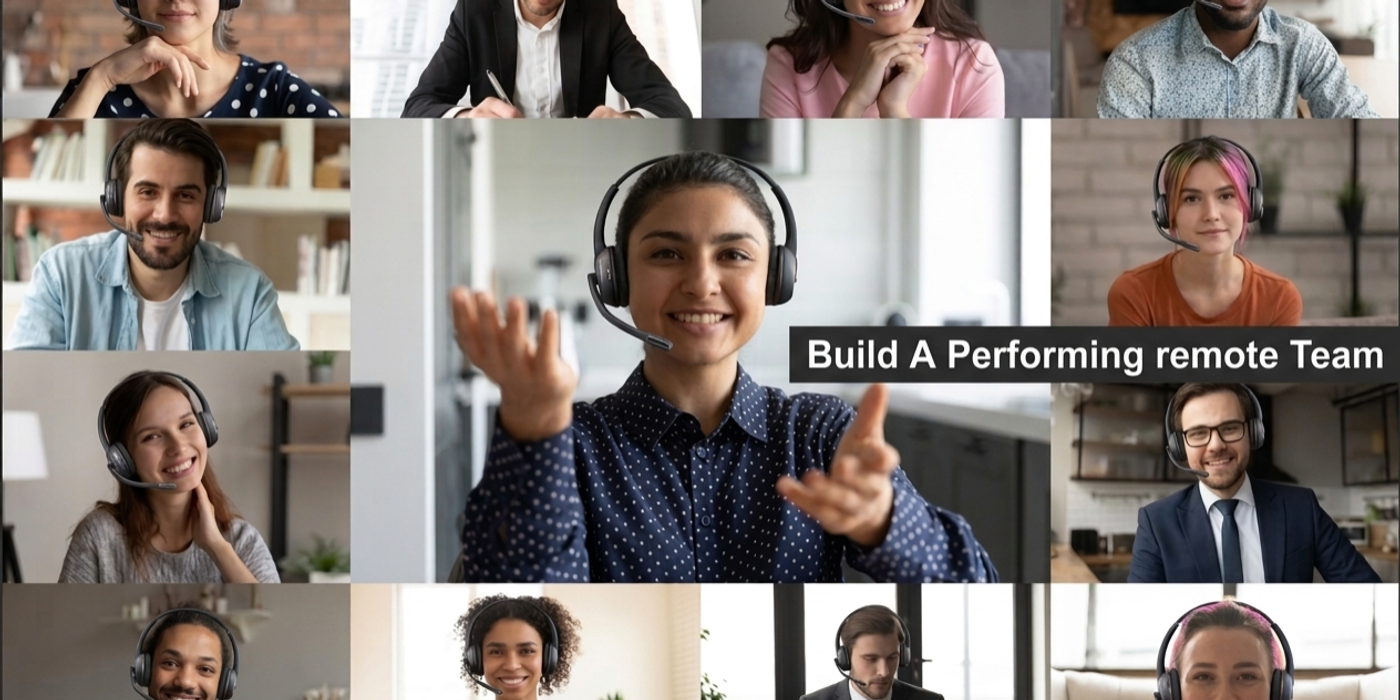
The gap between a remote team that underperforms and one that outperforms the industry is almost never about the individuals on the team. It is about the system those individuals operate within, the culture, the communication infrastructure, and the engagement model that either empowers them or leaves them adrift.
All Talentz builds remote-ready teams from the ground up. We source talent that is not just skilled but genuinely equipped for distributed work, people who communicate proactively, manage their own performance, and integrate seamlessly into distributed team cultures from day one.
1. Building a Remote Culture That Actually Connects People
Culture is not a ping-pong table or a branded Zoom background. It is the invisible architecture that determines how your team makes decisions, treats each other, and pursues excellence when no one is watching, which, in a remote environment, is most of the time.
For remote teams spanning New York to London, or Toronto to Manchester, culture does not happen by accident. It requires intentional design and consistent reinforcement.
Define Your Values in the Language of Remote Work
Most company values were written for office environments, collaboration, innovation, teamwork. These are not inherently wrong, but they need operational translation for remote contexts. "Collaboration" in a remote setting means explicit documentation practices, asynchronous decision-making frameworks, and regular video check-ins, not just a shared Google Drive.
All Talentz helps businesses articulate what their values actually look like in day-to-day remote behaviors, making culture something observable and measurable rather than inspirational wallpaper.
Create Transparency as a Default, Not an Exception
Remote teams thrive on information symmetry. When your Atlanta-based operations manager does not know what the London product team decided last Thursday, they cannot make good decisions on Friday. Radical transparency sharing business performance, strategic priorities, project status, and leadership thinking openly and regularly, eliminates the information deserts that kill remote productivity and trust.
Design Virtual Connection Points With Purpose
The informal connections that happen naturally in offices, the hallway conversation, the lunch invitation, the chance encounter by the coffee machine must be deliberately engineered in remote environments. This does not mean forced fun. It means intentional, low-friction opportunities for people to connect as humans, not just as task-executors.
High-performing remote businesses across Chicago, Vancouver, and London build these moments into their team rhythm: a weekly open channel for non-work conversation, a monthly virtual lunch for smaller subteams, a quarterly in-person gathering where budget allows. The exact format matters less than the consistency.
Celebrate in Public, Correct in Private
Recognition is the currency of remote culture. When achievements go unacknowledged in a distributed team, people feel invisible. Publicly recognizing contributions, through team channels, company newsletters, or all-hands calls reinforces the behaviors you want and signals to every team member that their work is seen, valued, and consequential.

Want to build a remote team that actually performs? All Talentz matches you with remote-ready professionals built for distributed success.
2. Communication Systems That Eliminate Chaos
In a collocated office, information leaks organically. People overhear conversations, see body language, and absorb context passively. In a remote environment, every piece of information that is not explicitly communicated is information that does not exist for the people who need it.
The most common reason remote teams in New York, London, and Toronto struggle is not talent, it is communication infrastructure. And the most common mistake is assuming that more meetings is the solution. It is not. Effective remote communication is about the right message, in the right channel, at the right time.
Establish Your Communication Stack
Every remote team needs a clearly defined communication architecture, not a collection of overlapping tools that everyone uses differently. A strong remote communication stack typically includes:
- Asynchronous messaging (Slack, Teams) for daily collaboration and quick questions
- Video conferencing (Zoom, Google Meet) for strategic discussions, relationship building, and complex problem-solving
- Project management (Asana, Monday.com, Jira) as the single source of truth for work status
- Documentation (Notion, Confluence) for institutional knowledge and decision records
- Email for formal external communication and matters that require a paper trail
The key is defining what each channel is for, and holding the team to that structure. When everything goes everywhere, nothing gets seen reliably.
Set Communication Norms, Not Assumptions
What is an acceptable response time for a Slack message? When should a video call replace an async message? What does "urgent" actually mean? In offices, these norms develop through observation and social pressure. In remote teams, you have to define them explicitly.
All Talentz recommends creating a simple Communication Norms document for every remote team we help build, a one-page guide that sets expectations for availability, response times, meeting participation, and information-sharing practices. It takes thirty minutes to write and saves hundreds of hours of confusion.
Protect Asynchronous Work Time
Particularly for teams spanning US and UK time zones, or US and Canadian markets with three-hour coast-to-coast gaps, asynchronous communication is not a compromise; it is a superpower. Teams that master async eliminate the bottleneck of waiting for real-time responses and enable thoughtful, document-first communication that produces better outcomes than reactive meeting culture.
Protecting this asynchronous work time, by limiting meetings to essential synchronous discussions and respecting deep work hours, is one of the most impactful things you can do for a distributed team's performance.
3. Engagement Strategies That Keep Your Remote Team Performing at Its Peak
Engagement is the invisible force that separates teams that maintain high performance over time from those that drift into mediocrity. Engaged employees are 17% more productive, 21% more profitable, and 59% less likely to leave, according to Gallup's landmark research. In remote environments, where the social and cultural reinforcements of an office are absent, keeping engagement high requires active, systematic investment.
Set Goals That Connect Individual Work to Business Outcomes
Remote employees lose engagement fastest when they cannot see the connection between their daily tasks and the organization's larger mission. SMART goal frameworks, Specific, Measurable, Achievable, Relevant, Time-bound, are a starting point, but the more powerful practice is showing every team member, from your Chicago account manager to your London developer, exactly how their contribution moves the needle on business outcomes that matter.
Invest in Professional Development as a Retention Strategy
In 2026, professional growth is not a benefit, it is an expectation. Remote employees, who already sacrifice some of the social benefits of office work, need to see a clear path to growth within your organization. Companies in New York, Toronto, and Manchester that invest in online learning platforms, mentorship programs, skill-building courses, and internal mobility opportunities see dramatically lower voluntary turnover among their remote workforces.
Give Ownership, Not Just Tasks
Micromanaged remote workers are disengaged remote workers. The most effective remote teams are built on a foundation of high trust and genuine autonomy, where team members are given the context, the tools, and the authority to make decisions and own outcomes, rather than being managed at the task level.
This requires hiring people with strong self-management instincts, which is exactly the profile All Talentz screens for when building remote teams. We look for evidence of autonomous decision-making, proactive communication, and outcome-orientation across every candidate's history.
Model Work-Life Integration From the Top
Remote work burnout is real, particularly for high-achievers who blur the lines between professional and personal time. Leaders who send emails at 11pm, schedule calls across multiple time zones without considering personal hours, and reward overwork inadvertently create cultures of exhaustion. The most sustainable remote teams, from Vancouver to London to Nashville, are led by people who model healthy boundaries and actively discourage the badge of busyness.
All Talentz builds remote-ready teams for US, UK, and Canadian businesses. Hire talent that performs from day one
Regional Considerations When Building Remote Teams Across US, UK, and Canada
United States: Regional Time Zone Management
The US spans four major time zones, Eastern (New York, Miami, Boston, Atlanta), Central (Chicago, Dallas, Minneapolis), Mountain (Denver, Phoenix), and Pacific (Los Angeles, Seattle, San Francisco). Building effective meeting cadences across this range requires intentional scheduling, protecting morning hours for collaborative work and afternoon windows for cross-coast alignment calls.
United Kingdom: London, Manchester, and the Remote-First Shift
UK businesses are navigating a significant cultural shift toward hybrid and remote work post-pandemic. London remains the primary hub, but talent increasingly flows to Manchester, Birmingham, Leeds, and Edinburgh, where cost of living is lower and quality of life considerations drive location decisions. UK remote teams also benefit from alignment with US Eastern time zones, the 5-hour gap is workable with slightly earlier starts on the UK side.
Canada: Toronto, Vancouver, and the Bilingual Consideration
Canada's remote workforce is anchored in Toronto (Ontario) and Vancouver (British Columbia), with significant talent pools in Calgary, Ottawa, and Montreal. Montreal introduces French-language considerations that some businesses must account for in their communications and HR practices. Canada's strong tech sector, combined with a highly educated workforce, makes it an excellent source of remote talent for US companies looking to expand their teams without the complexity of European international hiring.
Frequently Asked Questions: Building a High-Performing Remote Team
The technical assembly of a remote team, hiring, onboarding, and getting people into their roles, can happen within weeks with the right recruitment partner. Building a genuinely high-performing team, where culture, communication, and engagement systems are working smoothly, typically takes three to six months of consistent, deliberate effort. All Talentz accelerates the talent acquisition phase significantly, giving you more time to focus on the culture and systems work.
The most common and effective tool stack for US remote teams in 2026 includes Slack or Microsoft Teams for messaging, Zoom or Google Meet for video, Asana, Monday.com, or Jira for project management, Notion or Confluence for documentation, and Google Workspace or Microsoft 365 for productivity.
The specific tools matter less than the norms that govern their use, even the best tools fail if team members use them inconsistently
All Talentz evaluates remote-readiness through a combination of structured interview techniques, reference checks focused on distributed work history, and behavioral assessments. We look for evidence of proactive communication habits, comfort with asynchronous workflows, demonstrated self-management, and experience collaborating across time zones and geographies. Technical skills are table stakes we, creen for the human and operational qualities that determine whether someone will thrive in a remote environment.
Yes. All Talentz offers end-to-end remote team building for businesses that want to launch new distributed teams without the complexity of managing recruitment, screening, and onboarding internally. We can source an entire team, from entry-level contributors to senior leaders, across multiple functions, geographies, and time zones, and deliver them as a cohesive, pre-vetted group ready to hit the ground running.
Time zone management is one of the most underestimated challenges in remote team building. The most effective approach combines a clear overlap window, a defined number of hours each day where all team members are expected to be available for synchronous communication, with robust asynchronous workflows that allow productive work outside those windows. For teams spanning the US, UK, and Canada, we typically recommend a core overlap window between 9 AM and 12 PM Eastern, which accommodates US East, US Central, US Mountain, UK afternoon, and Canada Eastern time zones simultaneously.
The most costly mistake is treating remote work as a logistics problem rather than a cultural one. Companies that focus exclusively on tools and processes, and ignore culture, engagement, and connection, end up with technically functional but humanly disconnected teams. The second most common mistake is replicating office management styles in remote contexts, which produces micromanagement, low trust, and high turnover. Building a high-performing remote team requires a genuinely different leadership approach.
Very important, even for fully distributed teams. Research consistently shows that periodic in-person gatherings, even one or two per year, significantly strengthen the social bonds that sustain remote team performance over time. Companies in New York, London, and Toronto that invest in annual all-hands events or quarterly leadership retreats for their remote teams report substantially higher engagement and retention than those that operate exclusively online. All Talentz recommends budgeting for at least one in-person gathering per year for any fully remote team.
Absolutely, and many do. When culture, communication, and engagement systems are well-designed, remote teams regularly outperform their in-office counterparts on productivity, innovation, and retention metrics. The key is that performance must be actively built, not passively assumed. Remote teams that outperform are those where leadership has made a genuine investment in the systems, practices, and talent that make distributed excellence possible. That investment is exactly what All Talentz is designed to accelerate.
Build & Explore the Compensating Advantage of a Remote Team
Remote team performance does not happen by chance, it is the result of intentional design. The organizations that thrive in distributed environments are those that invest in building a culture rooted in transparency and connection, establishing communication systems that eliminate chaos, and sustaining engagement strategies that keep people motivated and aligned. When these pillars are in place, remote work stops being a compromise and becomes a strategic advantage, unlocking productivity, retention, and innovation across borders and time zones.
Ready to build a remote team that outperforms? All Talentz is your recruitment and remote staffing partner for the US, UK, Canada and beyound. Call: +1 (614) 502-1440